
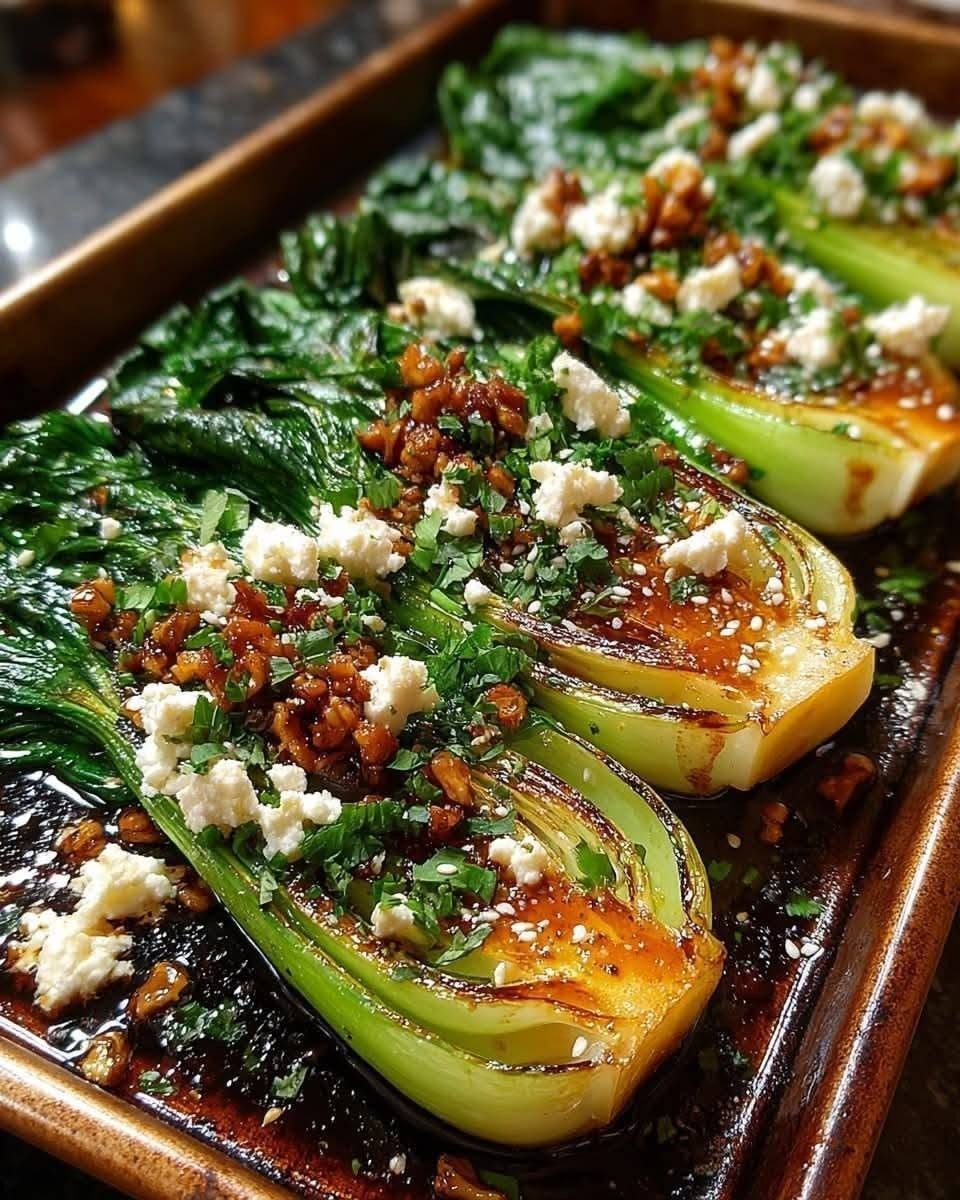
Mediterranean Roasted Bok Choy with Garlic & Feta
Recipe Description
Mediterranean Roasted Bok Choy with Garlic & Feta is a simple, flavourful vegetable dish that turns fresh bok choy into something incredibly delicious. The bok choy is roasted until the edges become beautifully caramelised while the centres remain tender and juicy. Fresh garlic, extra-virgin olive oil, lemon, herbs, and tangy feta cheese bring bright Mediterranean flavours to every bite.
This recipe is quick enough for a weeknight side dish but elegant enough to serve alongside a special dinner. The combination of roasted vegetables, creamy-salty feta, toasted edges, and fresh lemon makes it much more exciting than ordinary steamed greens.
Bok choy works particularly well with high-heat roasting because the leaves crisp slightly around the edges while the thicker stems develop a tender, almost juicy texture. Garlic adds savoury depth, oregano provides a Mediterranean character, and lemon keeps the finished dish fresh and balanced.
Serve this roasted bok choy alongside grilled chicken, baked fish, roasted potatoes, quinoa, rice, or crusty bread. You can also turn it into a light vegetarian meal by adding chickpeas, white beans, or a fried egg.
Servings and Preparation
Servings: 4
Prep Time: 10 minutes
Cook Time: 18–22 minutes
Total Time: About 30 minutes
Difficulty: Easy
Course: Side Dish or Light Main Course
Cuisine: Mediterranean-inspired
Ingredients
For the Roasted Bok Choy
4 medium bok choy
2 tablespoons extra-virgin olive oil
4 cloves of garlic, finely minced
1 teaspoon dried oregano
1/2 teaspoon paprika
1/2 teaspoon black pepper
1/2 teaspoon salt, or to taste
1/4 teaspoon red pepper flakes, optional
For Finishing
1/2 cup crumbled feta cheese
1 tablespoon fresh lemon juice
1 teaspoon lemon zest
2 tablespoons fresh parsley, chopped
1 tablespoon fresh dill, optional
1 tablespoon toasted sesame seeds, optional
Extra-virgin olive oil, for drizzling
Freshly cracked black pepper
Optional Additions
1/2 cup cherry tomatoes
1/4 cup sliced Kalamata olives
1/4 small red onion, thinly sliced
1 tablespoon capers
1/2 cup cooked chickpeas
A little grated Parmesan cheese
Fresh basil or mint
Instructions
1. Preheat the Oven
Preheat your oven to 425°F (220°C).
Line a large baking sheet with parchment paper or lightly coat it with olive oil.
Roasting at a relatively high temperature helps the bok choy develop caramelised edges without becoming overly soft.
2. Prepare the Bok Choy
Wash the bok choy thoroughly under cool running water, paying particular attention to the areas between the leaves where dirt can collect.
Pat the bok choy completely dry.
Trim away the very bottom of the stem, but keep enough of the core intact to hold the leaves together.
For medium bok choy, cut each one in half lengthwise. If the bok choy is particularly large, cut it into quarters.
Keeping the core intact is important because it prevents the leaves from falling apart during roasting.
3. Make the Garlic-Olive Oil Mixture
Add the olive oil, minced garlic, oregano, paprika, black pepper, salt, and optional red pepper flakes to a small bowl.
Mix thoroughly.
Let the mixture sit for a minute or two so the garlic and herbs begin infusing the olive oil.
Be careful not to add too much salt because feta will contribute additional saltiness later.
4. Coat the Bok Choy
Place the bok choy cut-side up on the baking sheet.
Brush the garlic and olive oil mixture generously over the cut sides and leaves.
Try to get some of the seasoned oil between the leaves without completely separating them.
Turn the bok choy briefly and brush the outer sides if desired.
Arrange everything in a single layer with a little space between each piece.
5. Add Optional Vegetables
If using cherry tomatoes, sliced red onion, olives, capers, or chickpeas, scatter them around the bok choy.
The tomatoes will become sweet and slightly blistered, while the onions will caramelise around the edges.
6. Roast
Place the baking sheet in the preheated oven.
Roast for approximately 10–12 minutes.
Remove the tray and carefully turn the bok choy so the cut sides face downward.
Return to the oven and roast for another 8–10 minutes.
The bok choy is ready when the thick stems are tender and the leaves have browned slightly around the edges.
For more caramelisation, place the tray under the broiler for 1–2 minutes at the end.
Watch carefully because the leaves can brown quickly.
7. Add Lemon and Feta
Remove the roasted bok choy from the oven.
Immediately drizzle with fresh lemon juice.
Sprinkle lemon zest over the top.
Add crumbled feta generously across the roasted vegetables.
Finish with fresh parsley and dill.
Add freshly cracked black pepper.
8. Serve
Transfer the roasted bok choy to a serving platter.
Drizzle lightly with extra-virgin olive oil.
Add a final squeeze of lemon if desired.
Serve immediately while the vegetables are warm and the feta is slightly softened from the heat.
Recipe Notes
Bok choy contains a considerable amount of water, so drying it thoroughly before roasting is important. Wet vegetables tend to steam rather than caramelise.
Don’t overcrowd the baking sheet. Giving each piece enough space allows hot air to circulate and encourages browning.
The garlic can burn if it is exposed directly to very high heat for too long. Finely minced garlic mixed with olive oil generally works well, but keep an eye on the vegetables during the final minutes.
If you prefer a milder garlic flavour, use whole or lightly crushed cloves instead.
Small bok choy tends to cook more quickly than large bok choy. Adjust the cooking time accordingly.
Feta is added after roasting rather than before because this keeps its fresh, creamy texture while allowing it to soften slightly from the heat.
Helpful Tips
Choose bok choy with firm white stems and fresh green leaves.
Dry the vegetables thoroughly before seasoning.
Use high-quality extra-virgin olive oil because its flavour is noticeable in this simple recipe.
Fresh lemon juice is strongly recommended over bottled juice.
Don’t overcook the bok choy. You want tender stems and lightly crisped leaves rather than completely soft greens.
Use a wide spatula when turning the bok choy so the leaves remain attached to the stems.
If you love garlic, add an additional clove.
For extra richness, drizzle a little good olive oil over the finished dish.
For a stronger Mediterranean flavour, add olives, capers, oregano, and sun-dried tomatoes.
How to Get Perfectly Roasted Bok Choy
The trick is high heat and enough space.
Arrange the bok choy in a single layer.
Place the cut sides against the hot baking sheet during part of the roasting process. Direct contact with the hot pan encourages browning and creates delicious caramelised edges.
Don’t cover the tray.
Avoid adding excessive liquid before roasting.
Check the vegetables around the 15-minute mark because smaller bok choy can cook quickly.
If the stems are tender but the leaves need more colour, briefly use the broiler.
Variations
Lemon Garlic Bok Choy
Skip the feta and add extra lemon zest, parsley, and toasted breadcrumbs.
Spicy Mediterranean Bok Choy
Increase the red pepper flakes and add a pinch of cayenne.
Greek-Inspired Bok Choy
Add feta, Kalamata olives, oregano, lemon, cherry tomatoes, and red onion.
Chickpea and Bok Choy Bowl
Add roasted chickpeas and serve the finished vegetables over quinoa or brown rice.
Creamy Feta Bok Choy
Mix feta with a little Greek yoghurt and lemon juice to make a creamy sauce, then spoon it over the roasted bok choy.
Parmesan Herb Bok Choy
Replace the feta with Parmesan and add fresh thyme and parsley.
Make-Ahead Instructions
The garlic oil mixture can be prepared several hours in advance and kept refrigerated.
The bok choy can be washed, trimmed, and dried ahead of time.
For best texture, roast the bok choy shortly before serving.
If you need to prepare the entire dish in advance, slightly undercook the bok choy and reheat it in a hot oven just before serving.
Add feta, lemon, and fresh herbs after reheating.
Storage
Allow leftovers to cool before placing them in an airtight container.
Refrigerate for up to 3 days.
Reheat in a hot oven, toaster oven, or air fryer for the best texture.
Microwaving is convenient but may soften the leaves considerably.
If the bok choy has been refrigerated, refresh it with a little lemon juice and fresh parsley before serving.
Estimated Nutritional Information
Approximate nutrition per serving, based on 4 servings and including feta:
Calories: 170–210 kcal
Protein: 6–8 g
Carbohydrates: 10–13 g
Fat: 12–15 g
Fibre: 3–5 g
Sugar: 4–5 g
Sodium: 500–700 mg
These values are estimates and will vary depending on the size of the bok choy, amount of feta, olive oil, and optional ingredients used.
Adding chickpeas, grains, or additional cheese will increase the calorie and macronutrient content.
Potential Benefits
Bok choy is a nutrient-rich cruciferous vegetable that provides fibre, vitamin C, vitamin K, folate, and other micronutrients.
Its high water content also makes it relatively light while providing plenty of volume.
Garlic adds substantial flavour and contains naturally occurring sulphur-containing compounds.
Extra-virgin olive oil provides predominantly unsaturated fats.
Feta contributes protein and calcium, while fresh herbs and lemon provide additional flavour without needing heavy sauces.
For a more filling meal, pair the bok choy with chickpeas, lentils, beans, quinoa, eggs, chicken, or fish.
Frequently Asked Questions
What is the best type of bok choy for roasting?
Baby bok choy is especially convenient because it is tender and cooks quickly. Regular medium-sized bok choy works very well too.
Can I use large bok choy?
Yes. Larger bok choy can be cut into quarters rather than halves so the thick stems roast evenly.
Do I need to remove the outer leaves?
Only remove leaves that are damaged, wilted, or dirty. The healthy outer leaves can be roasted.
Can I use frozen bok choy?
Fresh bok choy is preferred because frozen bok choy contains more moisture and may not caramelise as nicely.
Can I make this without feta?
Absolutely. Parmesan, goat cheese, or a dairy-free cheese alternative can be used, or you can simply omit cheese.
Can I add chicken?
Yes. Grilled or roasted chicken makes a great addition and turns the dish into a more substantial meal.
Can I use tofu?
Yes. Cubed firm tofu can be roasted alongside the bok choy for a plant-based protein option.
Why is my bok choy watery?
It may not have been dried thoroughly or the pan may have been overcrowded. Use a large baking sheet and roast at high heat.
How can I make the edges crispier?
Use a hot oven, dry the bok choy well, avoid overcrowding, and briefly broil at the end.
Can I make it vegan?
Yes. Omit the feta or use a plant-based feta alternative.
Can I add tomatoes?
Yes. Cherry tomatoes roast beautifully alongside bok choy and add sweetness and acidity.
What should I serve with roasted bok choy?
It pairs wonderfully with grilled chicken, baked fish, salmon, steak, rice, quinoa, couscous, potatoes, or crusty bread.
Can I use another cheese?
Yes. Feta, Parmesan, goat cheese, mozzarella, or Pecorino can all work, depending on the flavour profile you want.
Serving Suggestions
For a simple dinner, serve the roasted bok choy alongside lemon herb chicken and a small portion of rice.
For a vegetarian meal, serve it with quinoa, roasted chickpeas, hummus, and warm pita.
For a Mediterranean spread, pair it with grilled fish, tomatoes, olives, cucumber salad, and feta.
For a light lunch, place the roasted bok choy over quinoa and top with a poached egg.
The combination of green roasted leaves, golden garlic edges, white feta, and fresh herbs makes an attractive presentation on a large ceramic platter.
Final Note
Mediterranean Roasted Bok Choy with Garlic & Feta is a perfect example of how a simple vegetable can become the star of the plate with just a few carefully chosen ingredients. Roasting concentrates the natural flavours of the bok choy, while garlic and olive oil create a rich savoury base. Lemon cuts through that richness, herbs add freshness, and feta provides a creamy, salty finish.