
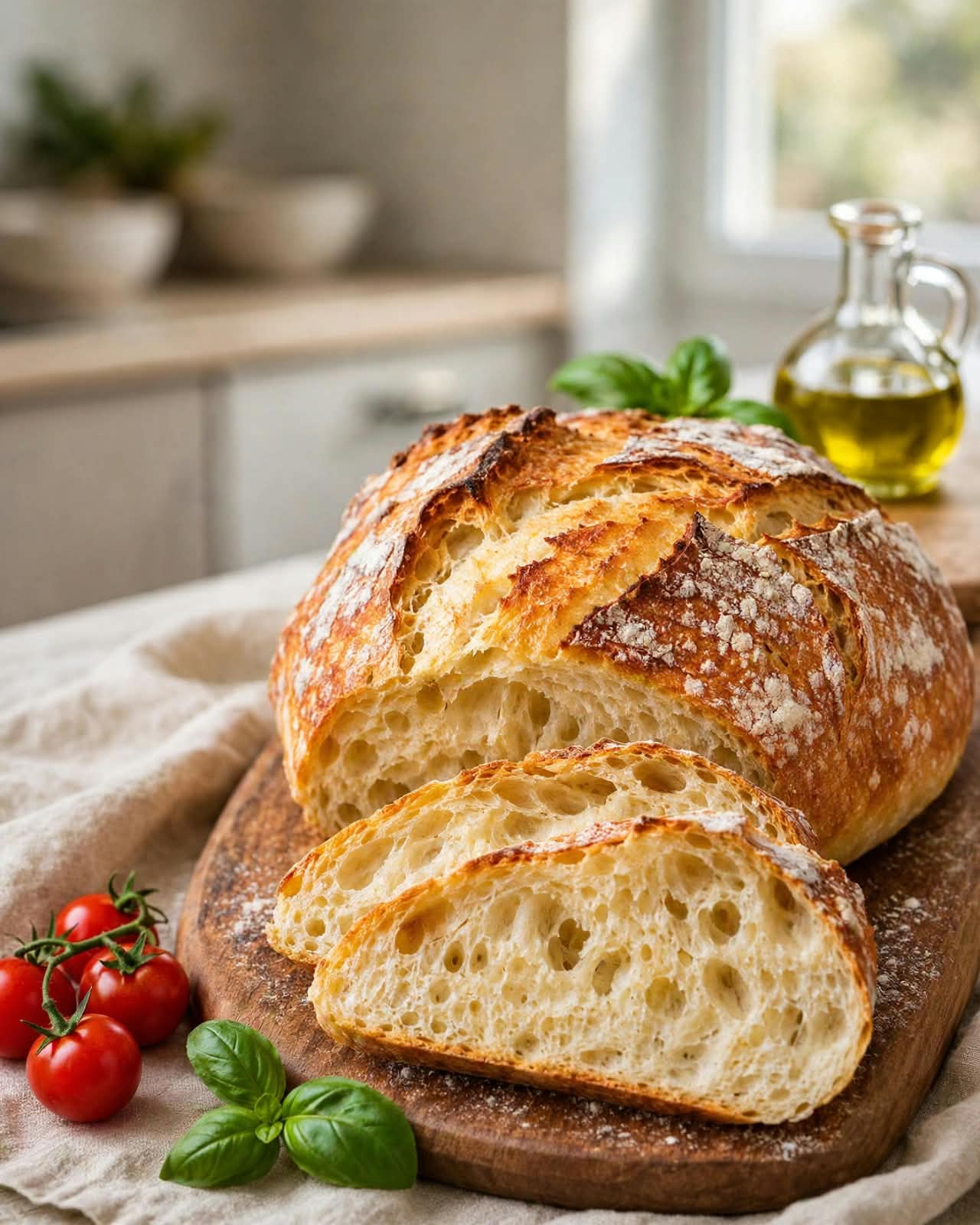
Crusty Italian Bread
Italian Bread is a rustic homemade loaf with a crisp golden crust, a soft chewy center, and the simple flavor of flour, yeast, water, olive oil, and salt. Italian Bread is a dependable recipe for sandwiches, soups, pasta dinners, bruschetta, or simply serving warm with butter and olive oil.
Prep Time: 20 minutes
Rise Time: 1 hour 45 minutes
Cook Time: 30 to 35 minutes
Total Time: About 2 hours 40 minutes
Servings: 1 large loaf, about 12 slices
Ingredients
For the Dough
- 3 1/2 cups bread flour, plus more as needed
- 1 1/4 cups warm water, about 105°F to 110°F
- 2 1/4 teaspoons active dry yeast
- 1 tablespoon granulated sugar or honey
- 1 1/2 teaspoons fine sea salt
- 2 tablespoons olive oil
For Finishing
- 1 tablespoon olive oil
- 1 tablespoon cornmeal or semolina, optional
- 1 tablespoon flour, for dusting
- Water for creating steam in the oven
Why You’ll Love This Recipe
Italian Bread gives you the classic contrast everyone wants in a crusty loaf: a deeply golden exterior and a tender, airy interior. The dough is easy enough for beginner bakers, yet the finished loaf looks impressive on the table.
Another reason to love Italian Bread is its versatility. Slice it thickly for sandwiches, toast it for breakfast, cube it for croutons, or serve it beside soups, stews, pasta, and roasted meats.
How to Make Italian Bread
Step 1: Activate the Yeast
Pour the warm water into a large mixing bowl. Add the sugar or honey and sprinkle the yeast over the surface.
Let the mixture stand for 5 to 10 minutes, until it becomes foamy.
Step 2: Add the Olive Oil
Stir the olive oil into the yeast mixture.
Step 3: Add the Flour and Salt
Add about 3 cups of bread flour and the salt.
Mix with a wooden spoon or dough hook until a shaggy dough forms.
Gradually add the remaining flour, a little at a time, until the dough pulls away from the sides of the bowl but still feels slightly tacky.
Step 4: Knead the Dough
Turn the dough onto a lightly floured surface.
Knead for 8 to 10 minutes, folding and pushing the dough until it becomes smooth and elastic.
A properly kneaded dough helps Italian Bread develop a light, chewy structure.
Step 5: First Rise
Lightly grease a clean bowl with olive oil.
Place the dough in the bowl and turn it once so the surface is lightly coated.
Cover with plastic wrap or a clean kitchen towel and let rise in a warm place for 60 to 75 minutes, or until doubled in size.
Step 6: Shape the Loaf
Gently punch down the risen dough to release excess gas.
Turn it onto a lightly floured work surface and shape it into a long oval or bâtard-style loaf, about 12 to 14 inches long.
Place the loaf seam-side down on a parchment-lined baking sheet.
Step 7: Second Rise
Cover the shaped loaf loosely with a clean towel.
Let it rise for another 30 to 40 minutes.
During this time, Italian Bread should become noticeably puffy but still hold its shape.
Step 8: Preheat the Oven
Preheat the oven to 425°F or 220°C.
Place a small metal pan on the lower oven rack while the oven heats. This pan will be used to create steam.
Step 9: Score the Loaf
Use a sharp knife or bread lame to make 3 or 4 diagonal slashes across the top of the loaf.
Score about 1/4 inch deep.
These cuts allow the loaf to expand evenly during baking and give it the classic rustic look.
Step 10: Create Steam
Place the bread on the center rack.
Carefully pour about 1 cup of hot water into the preheated metal pan on the lower rack and close the oven door immediately.
The steam helps Italian Bread develop a crisp, shiny crust.
Step 11: Bake
Bake for 30 to 35 minutes, or until the loaf is deeply golden brown.
The bread should sound hollow when tapped on the bottom.
Step 12: Cool Completely
Transfer the loaf to a wire rack.
Let it cool for at least 45 minutes before slicing.
Serving Suggestions
Italian Bread is excellent served warm with butter, olive oil, or a mixture of olive oil and balsamic vinegar.
Use thick slices for grilled cheese, garlic bread, panini, or open-faced sandwiches.
Italian Bread also makes a great base for crostini, French toast, bread pudding, or homemade stuffing when you have leftovers.
If you want a fresh and easy dinner, try this Mediterranean Sheet Pan Chicken with Tomatoes & Artichokes with juicy chicken, roasted vegetables, garlic, lemon, and herbs.
Recipe Tips
For the best shape, keep the dough slightly tacky rather than stiff. A softer dough expands more easily in the oven and produces a lighter interior. If it sticks heavily to your hands, dust the work surface with only a small amount of flour instead of adding a large quantity all at once.
Use bread flour if possible because its higher protein content helps create a chewy interior and stronger structure.
Measure flour carefully. Too much flour can make Italian Bread dense and dry. Spoon the flour into the measuring cup and level it rather than packing it down.
The dough should feel slightly tacky, not wet. Avoid adding too much extra flour during kneading.
Steam during the first part of baking is one of the easiest ways to improve the crust.
Easy Variations
Italian Bread is easy to adapt with herbs, cheese, garlic, or seeds.
To give the loaf a garlic-herb flavor, mix 1 teaspoon dried oregano, 1 teaspoon dried basil, and 1/2 teaspoon garlic powder into the flour.
For a cheesy variation, fold 1/2 cup grated Parmesan into the dough before the first rise.
If you prefer a rosemary loaf, add 1 tablespoon finely chopped fresh rosemary along with a little extra olive oil.
For a savory seasonal dish, try this Golden Butternut & Spinach Rosti Quiche with Feta, Cranberry, Walnuts & Sage Brown Butter with a golden squash crust and rich fall flavors.
Make-Ahead Instructions
Italian Bread can be prepared ahead by using a slow refrigerator rise.
After kneading, place the dough in a lightly oiled bowl, cover tightly, and refrigerate overnight.
The next day, let the dough sit at room temperature for about 30 minutes before shaping.
Shape the loaf, allow the second rise, then bake as directed.
Storage and Reheating
Store cooled Italian Bread in a paper bag or bread box at room temperature for up to 2 days.
To refresh the loaf, place it in a 350°F or 175°C oven for 5 to 8 minutes.
For freezing, wrap the whole loaf or individual slices tightly in plastic wrap and place them in a freezer-safe bag.
Freeze for up to 3 months. Thaw at room temperature and warm briefly in the oven before serving.
Nutrition Information
Approximate nutrition per slice:
Calories: 180
Protein: 5 g
Carbohydrates: 33 g
Fat: 3 g
Saturated Fat: Less than 1 g
Fiber: 1 g
Sugar: 1 g
Sodium: 290 mg
Nutrition values are estimates and may vary depending on flour, olive oil, slice size, and any optional toppings.
Frequently Asked Questions
Can I make Italian Bread with all-purpose flour?
Yes. All-purpose flour works well, though the crumb may be slightly softer and less chewy than bread made with bread flour.
Can I use instant yeast?
Yes. Instant yeast can usually be mixed directly into the flour. You can skip the separate activation step, although using the same warm water temperature is still helpful.
Why is my loaf dense?
The dough may have needed more kneading, more rising time, or less flour. Yeast that is old or inactive can also prevent proper rising.
Can I make Italian Bread without a stand mixer?
Absolutely. This recipe works very well when mixed and kneaded by hand.
How do I know when the dough has risen enough?
It should roughly double in volume during the first rise. During the second rise, it should look puffy and slowly spring back when gently pressed.
Can I add olives or sun-dried tomatoes?
Yes. Fold chopped, well-drained olives or sun-dried tomatoes into the dough before the first rise.
How do I get an extra crisp crust?
Use steam, bake until the loaf is deeply golden, and cool it uncovered on a wire rack.
Final Thoughts
Italian Bread is a simple homemade loaf with a crisp crust, soft chewy center, and versatile flavor that works with almost any meal.
Because Italian Bread uses basic pantry ingredients and a straightforward method, it is a great recipe for anyone who wants to start baking bread at home.
Keep Italian Bread in your baking collection whenever you want a rustic loaf for sandwiches, soups, pasta dinners, bruschetta, or simply enjoying warm with butter and olive oil.
1 thought on “Crusty Italian Bread”