
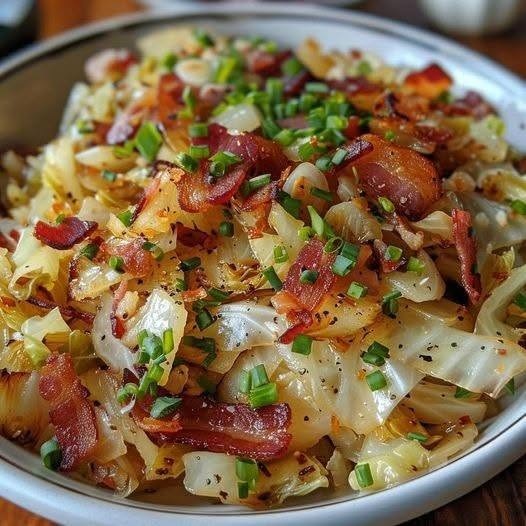
Fried Cabbage with Bacon, Onion, and Garlic
Description
Fried Cabbage with Bacon, Onion, and Garlic is a simple, comforting side dish made with tender cabbage, crispy bacon, sweet sautéed onion, and plenty of fragrant garlic. It is an inexpensive recipe that transforms a few everyday ingredients into something incredibly flavourful.
The bacon is cooked first so its rendered fat can flavour the entire skillet. The onion is then slowly softened until golden and sweet, followed by garlic and shredded cabbage. As the cabbage cooks, it becomes tender while developing lightly caramelised edges that give the dish a deliciously savoury, slightly sweet flavour.
This recipe is perfect for busy weeknight dinners because it requires only one skillet and straightforward ingredients. Serve it alongside roasted chicken, grilled pork, steak, meatloaf, sausages, or even eggs for a satisfying meal.
Servings
6 servings
Prep Time
15 minutes
Cook Time
25 minutes
Total Time
40 minutes
Ingredients
- 6 slices of thick-cut bacon, chopped
- 1 large head of green cabbage, about 2 pounds, cored and thinly sliced
- 1 large yellow onion, thinly sliced
- 4 cloves of garlic, minced
- 1 tablespoon butter, optional
- 1/2 teaspoon salt, plus more to taste
- 1/2 teaspoon freshly ground black pepper
- 1/2 teaspoon smoked paprika
- 1/4 teaspoon onion powder
- 1/4 teaspoon red pepper flakes, optional
- 1 tablespoon apple cider vinegar
- 1 teaspoon Worcestershire sauce, optional
- 2 tablespoons chopped fresh parsley, for garnish
Instructions
Step 1: Prepare the Vegetables
Remove any damaged outer leaves from the cabbage.
Cut the cabbage into quarters and remove the tough core from each section. Thinly slice the cabbage into strips.
Try to keep the slices relatively uniform so they cook at approximately the same rate.
Thinly slice the onion and mince the garlic.
Set all of the vegetables aside.
Step 2: Cook the Bacon
Place a large, heavy skillet or Dutch oven over medium heat.
Add the chopped bacon and cook for approximately 6–8 minutes, stirring occasionally, until the bacon is browned and crispy and has released its fat.
Use a slotted spoon to transfer about half of the cooked bacon to a plate lined with paper towels.
Leave the remaining bacon and rendered fat in the skillet.
If your bacon produces a very large amount of fat, carefully remove some, leaving approximately 2–3 tablespoons in the pan.
Step 3: Cook the Onion
Add the sliced onion to the bacon drippings.
Cook over medium heat for approximately 5–7 minutes, stirring frequently.
The onion should become soft, lightly golden, and fragrant.
For an even richer flavour, reduce the heat slightly and allow the onion to cook for a few additional minutes until it becomes more caramelised.
Step 4: Add the Garlic
Add the minced garlic to the skillet.
Cook for approximately 30–60 seconds, stirring constantly.
Be careful not to burn the garlic. Burnt garlic can become bitter.
Step 5: Add the Cabbage
Add the sliced cabbage to the skillet.
At first, the skillet may look very full, but cabbage will shrink considerably as it cooks.
Use tongs or a large spatula to toss the cabbage with the bacon, onion, garlic, and rendered bacon fat.
Cook uncovered for approximately 5 minutes, stirring occasionally.
Step 6: Season
Add the salt, black pepper, smoked paprika, onion powder, and red pepper flakes if using.
Remember that bacon is already salty, so start with a modest amount of salt and adjust toward the end.
Continue tossing the cabbage so the seasonings are distributed evenly.
Step 7: Cook Until Tender
Reduce the heat to medium-low.
Continue cooking for approximately 10–15 minutes, stirring every few minutes.
The cabbage should become tender but still have some texture.
If you prefer softer cabbage, cook it for several additional minutes.
For slightly browned and caramelised cabbage, allow it to sit undisturbed for 1–2 minutes at a time before stirring. This helps some of the cabbage develop golden-brown edges.
Step 8: Add the Finishing Flavour
Once the cabbage reaches your preferred texture, add the apple cider vinegar and Worcestershire sauce if using.
Stir thoroughly.
The vinegar adds a small amount of acidity that balances the richness of the bacon and butter.
Taste the cabbage and adjust the salt and pepper as needed.
Step 9: Finish With Bacon
Return the reserved crispy bacon to the skillet.
Add the optional tablespoon of butter and stir until melted.
Cook for another 1–2 minutes so all the flavours come together.
Remove from the heat.
Step 10: Garnish and Serve
Transfer the fried cabbage to a serving bowl or serve directly from the skillet.
Sprinkle with chopped fresh parsley.
Serve immediately while warm.
Recipe Notes
The bacon provides both seasoning and cooking fat, so additional oil usually isn’t necessary.
If using very lean bacon, you may need to add a small amount of olive oil or butter to prevent the vegetables from sticking.
Green cabbage is the classic choice for this recipe, but savoy cabbage can also be used.
Do not overcrowd the skillet with extremely wet cabbage. After washing the cabbage, drain and dry it well before cooking.
The amount of cooking time can be adjusted according to your preferred texture. Some people enjoy cabbage with a little bite, while others prefer it very soft and deeply caramelised.
The apple cider vinegar is optional but highly recommended because its acidity brightens the rich bacon flavour.
Helpful Tips
Use a Large Skillet
Cabbage takes up a surprising amount of space when raw. A large skillet or Dutch oven makes stirring much easier.
Don’t Rush the Onion
Allowing the onion to soften and lightly caramelise gives the dish much more flavour.
Don’t Burn the Garlic
Garlic only needs about 30–60 seconds before the cabbage is added. Keeping it moving prevents bitterness.
Let the Cabbage Brown
If you want deeper flavour, avoid stirring constantly. Give the cabbage a minute or two of contact with the hot skillet so it can develop golden edges.
Season Carefully
Bacon can contain quite a bit of sodium. Taste the finished cabbage before adding additional salt.
Add Vinegar at the End
Adding vinegar toward the end preserves its bright flavour and prevents the dish from becoming too acidic during prolonged cooking.
Variations
Spicy Fried Cabbage
Increase the red pepper flakes or add a pinch of cayenne pepper for a spicy version.
Southern-Style Fried Cabbage
Add a little smoked paprika, black pepper, and a small splash of chicken broth while the cabbage cooks for extra savoury flavour.
Sausage and Cabbage
Replace some of the bacon with sliced smoked sausage or kielbasa for a heartier one-pan meal.
Cabbage With Ham
Use diced cooked ham instead of bacon. Add a small amount of olive oil or butter for cooking the onions and cabbage.
Turkey Bacon Version
Turkey bacon can be substituted for regular bacon. Because it generally produces less rendered fat, add a little olive oil or butter as needed.
Vegetarian Fried Cabbage
Leave out the bacon and sauté the onion and cabbage in olive oil or butter. Add smoked paprika for a smoky flavour.
Add More Vegetables
Sliced bell peppers, shredded carrots, mushrooms, or chopped kale can be added for extra variety.
Make-Ahead Instructions
Fried cabbage is a good make-ahead side dish.
Prepare the recipe completely and allow it to cool.
Transfer it to an airtight container and refrigerate.
When ready to serve, reheat it in a large skillet over medium heat, stirring occasionally until warmed through.
You can add a small splash of chicken broth or water if the cabbage seems dry.
For the best texture, add a little fresh crispy bacon after reheating if you have some available.
Storage
Allow leftovers to cool before transferring them to an airtight container.
Refrigerate for up to 3–4 days.
Reheat gently in a skillet or microwave until hot.
The skillet method is preferable because it helps restore some of the caramelised texture.
Freezing Instructions
Fried cabbage can be frozen, although the cabbage will become softer after thawing.
Allow the cooked cabbage to cool completely.
Place it in a freezer-safe container or freezer bag, removing as much excess air as possible.
Freeze for up to 2 months for best quality.
Thaw overnight in the refrigerator.
Reheat in a skillet over medium heat, stirring occasionally.
For better texture after freezing, allow some moisture to evaporate during reheating.
Serving Suggestions
Fried cabbage with bacon, onion, and garlic works beautifully as a side dish.
Serve it with:
- Roasted chicken
- Grilled chicken
- Pork chops
- Roast beef
- Steak
- Meatloaf
- Smoked sausage
- Grilled sausages
- Baked ham
- Fried eggs
- Mashed potatoes
- Roasted potatoes
- Cornbread
- Green beans
It can also be served as part of a simple bowl meal with cooked chicken, beans, or another protein.
Nutritional Information
Approximate nutrition per serving, based on 6 servings:
- Calories: 190
- Protein: 7 g
- Carbohydrates: 13 g
- Fat: 13 g
- Saturated Fat: 4.5 g
- Fibre: 4 g
- Sugar: 7 g
- Sodium: 480 mg
Nutritional values are estimates and can vary depending on the bacon, cabbage, butter, and other ingredients used.
Benefits
Provides Vegetables
Cabbage is a nutrient-rich vegetable that provides fibre, vitamin C, vitamin K, and other nutrients.
Contains Fibre
The cabbage contributes dietary fibre, which is an important part of a balanced diet and supports normal digestive health.
Provides Protein
Bacon contributes protein, although it is also relatively high in saturated fat and sodium, so portion size is worth considering.
Flavourful Without a Complicated Sauce
The combination of bacon drippings, onions, garlic, spices, and a small amount of vinegar creates a flavourful dish without requiring a complicated sauce.
Naturally Lower in Carbohydrates
Cabbage is relatively low in carbohydrates compared with many starchy side dishes, making this recipe suitable for many lower-carbohydrate meal patterns.
Recipe Q&A
Can I use red cabbage?
Yes. Red cabbage can be used, although it will give the dish a different colour and slightly different flavour.
Do I have to use bacon?
No. Bacon provides the signature smoky and savoury flavour, but you can substitute turkey bacon, ham, or sausage, or omit it entirely.
Why is my cabbage watery?
Cabbage naturally releases water as it cooks. If the skillet contains too much liquid, continue cooking uncovered until the excess moisture evaporates.
How do I make the cabbage more caramelised?
Cook it uncovered over medium heat and avoid stirring constantly. Give the cabbage time to make direct contact with the hot skillet.
Can I make this recipe without butter?
Yes. The bacon drippings usually provide enough fat. If your bacon is very lean, add a small amount of olive oil instead.
Can I add potatoes?
Yes, although potatoes will increase the carbohydrate content. Dice them into small pieces and cook them until nearly tender before adding the cabbage.
Can I use pre-shredded cabbage?
Yes. Bagged shredded cabbage or coleslaw mix can save preparation time. If using coleslaw mix, check whether it contains carrots or other vegetables and adjust accordingly.
Can I use garlic powder instead of fresh garlic?
Yes, but fresh garlic provides a stronger and more aromatic flavour. If using garlic powder, add it with the other seasonings.
How do I make it spicy?
Add red pepper flakes, cayenne pepper, hot sauce, or diced jalapeño.
Can I make this in a slow cooker?
You can, but the texture will be different. Fried cabbage is best cooked in a skillet because direct heat creates the browned and caramelised edges that give the dish its characteristic flavour.
Is fried cabbage healthy?
It can be part of a balanced diet. Cabbage provides fibre and nutrients, while bacon adds flavour but also contributes sodium and saturated fat. Portion size and the rest of the meal are important considerations.
Can this recipe help with weight loss?
No single food specifically burns fat or causes weight loss. This cabbage dish can fit into a balanced, calorie-conscious eating pattern, particularly when served with an appropriate portion of protein and other vegetables.
Final Thoughts
Fried Cabbage with Bacon, Onion, and Garlic proves that simple ingredients can create an incredibly satisfying dish. The combination of crispy bacon, sweet softened onion, aromatic garlic, and tender cabbage creates layers of savoury flavour in every bite.
It is inexpensive, easy to prepare, naturally lower in carbohydrates than many traditional side dishes, and requires just one skillet. The optional apple cider vinegar adds a bright finishing note that keeps the rich bacon flavour from feeling too heavy.
Whether you’re serving it alongside roasted chicken, steak, pork chops, sausage, or a simple weeknight dinner, this comforting cabbage recipe is an easy way to put a flavourful vegetable side dish on the table.