
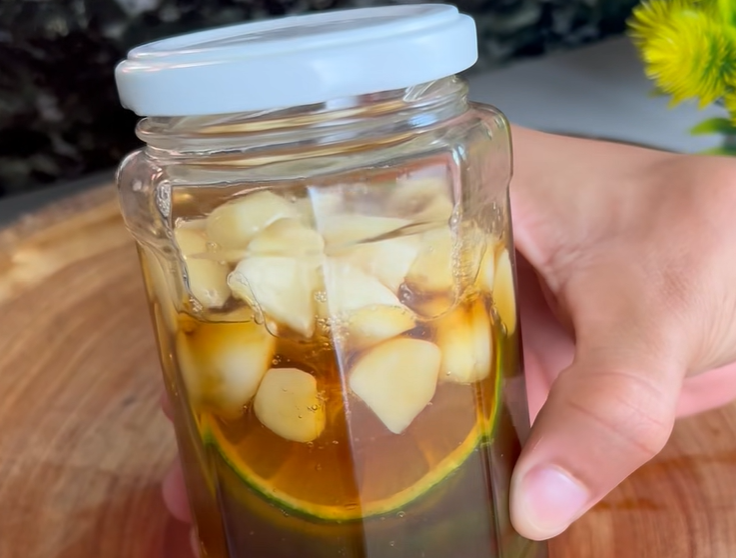
The Syrup That People Who Had Trouble Reading Fine Print Are Now Silently Suggesting to Everyone They Know
It was stated in passing by a neighbor. All three ingredients are already in the kitchen. combined and refrigerated. A teaspoon prior to breakfast each morning.There was nothing to lose, so he gave it a shot. Three weeks later, something had changed, so he continued to try. Not in a big way. Not in a single day. On the page, however, the words that had been a little mushy at the edges were now sharper. He could once again read the distant signs he had been reading by guesswork.At three months, he returned to his optometrist. After carefully examining his data, she inquired as to what had changed.He explained the jar in the refrigerator to her.
an important note: vision changes should always be assessed by a qualified optometrist or ophthalmologist. This syrup is a traditional natural remedy with a long history of use and promising nutritional science behind it — but it is not a medical treatment and should never replace professional eye care. If you experience sudden or significant changes in vision, consult a doctor promptly. Think of this syrup as nourishment for the eyes — something that supports and protects rather than treats.
What Happens to Vision Over Time and Why Nutrition Matters More Than Most People Know
The eye is one of the most metabolically active organs in the body. The retina — the light-sensitive layer at the back of the eye — consumes more oxygen per gram of tissue than almost any other organ. The lens, which focuses incoming light, relies on a precise biochemical environment to remain clear and flexible. The blood vessels that supply the eye are among the smallest and most delicate in the entire body — highly susceptible to oxidative damage, inflammation, and the effects of poor circulation.
When the eye receives optimal nutrition — sufficient antioxidants to neutralise free radical damage, adequate compounds to maintain the health of the retinal cells, and the right nutrients to support the microcirculation that feeds the optic nerve and surrounding tissue — it maintains its function for far longer and far better than one that does not.
What accelerates the deterioration of vision — beyond genetics — is oxidative stress, chronic inflammation, poor microcirculation, and nutritional deficiency in the specific compounds that the eye relies upon. Address these things consistently and the eye’s natural resilience and self-repair capacity becomes remarkable.
The three ingredients in this syrup each address a different piece of this picture — and together they create something that is nutritionally extraordinary for eye health.
The first is one of the most vitamin C-rich natural foods available anywhere. Vitamin C is essential for the health of the blood vessels within the eye — particularly the capillaries of the retina, where its antioxidant protection is most critical. It plays a central role in the regeneration of other antioxidants within the eye, including vitamin E and glutathione — the lens’s primary defence against the oxidative damage that leads to cataracts. High vitamin C intake has been consistently associated in research with reduced risk of cataract formation and slower progression of age-related macular degeneration. This ingredient also contains flavonoids that strengthen the capillary walls of the retinal blood vessels, reducing the permeability and fragility that leads to the kind of microvascular damage that compromises vision over time.
The second ingredient has been studied specifically for its effects on eye health — and the results have been significant. Its key compound, allicin, is a powerful vasodilator that improves blood flow through the smallest blood vessels in the body — including the delicate capillaries of the eye. Better circulation to the retina and optic nerve means more oxygen, more nutrients, and more efficient removal of metabolic waste products from the tissue. This ingredient also contains quercetin and selenium — both documented to support retinal cell health and protect against oxidative damage in the eye. Studies have shown that regular consumption is associated with reduced intraocular pressure — one of the primary risk factors for glaucoma.
The third ingredient binds and preserves everything the other two deliver. It is rich in natural enzymes, antioxidants, and anti-inflammatory compounds that calm the systemic inflammation that contributes to vascular deterioration throughout the body — including in the eye. It also contains trace minerals including zinc — a nutrient found in high concentrations in the retina and essential for the conversion of vitamin A into the protective pigment that the retina uses to function in low light.
Three ingredients. Each addressing vision health from a different angle. Combined into a syrup that the body absorbs efficiently, uses directly, and benefits from with remarkable consistency.
What You Will Need
5 fresh limes, juiced ( approximately 100ml of fresh lime juice )
1 full head of fresh garlic ( 10 to 12 cloves ), peeled and finely minced or pressed
200g of raw unprocessed honey ( not heated or filtered — raw honey retains its active enzymes and full nutritional profile )
A clean glass jar with a tight-fitting lid
Optional: a thin slice of fresh ginger added to the jar for additional anti-inflammatory and circulatory benefit
How to Make It
Peel all the garlic cloves and mince them as finely as possible using a sharp knife or a garlic press. Place the minced garlic in the clean glass jar.
Juice all five limes and pour the fresh juice directly over the garlic. The citric acid in the lime juice will immediately begin drawing the active compounds from the garlic — and this interaction between the two is part of what makes the syrup more potent than either ingredient used separately.
Pour the raw honey over the lime and garlic mixture, stirring gently until everything is well combined and the garlic is fully coated and suspended in the liquid. Add the ginger slice if using. Seal the jar tightly.
Place the jar in the refrigerator and leave it to infuse for a minimum of 24 hours before first use. After 48 hours the infusion is significantly more potent — and after one week the flavour mellows and the active compounds are at their most concentrated.
The syrup keeps in the refrigerator for up to four weeks. Make a fresh jar as each one is finished.
How to Take It
Take one teaspoon of the syrup every morning on an empty stomach — before coffee, before breakfast, before anything else. The empty stomach allows the compounds to be absorbed directly and efficiently without competition from other foods.
Stir the jar gently before each use to redistribute the garlic and lime juice through the honey. Make sure each teaspoon includes a small amount of the minced garlic as well as the liquid — the garlic itself contains the allicin that the eye’s circulation relies on most.
For the first two weeks, one teaspoon in the morning is sufficient. After that, a second teaspoon in the evening can be added for accelerated benefit — particularly for anyone whose vision challenges are more significant.
What to Expect and When
Most people feel a decrease in eye strain and weariness within the first week, especially after long days spent reading or staring at screens. By the evening, the eyes are less dry, weary, and light-sensitive.
Many report feeling more focused by week two or three, especially up close. On a page, words that needed work show up more easily. It starts to feel less noticeable, the small blur at the margins of vision that had become usual.
The cumulative nutritional impact on the retinal vasculature, lens health, and optic nerve circulation becomes more noticeable after six to eight weeks of regular daily use. Some folks discover that they are using their glasses less frequently. At their subsequent session with the optometrist, others report improvements.
Depending on the type of vision problems involved, different outcomes are obtained. For visual impairment caused by oxidative damage, poor circulation, and inflammatory stress, nutritional supplementation is most effective. It does not take the role of professional eye care; rather, it enhances it.
One teaspoon. Each morning. from a jar that is nearly free and just requires ten minutes to prepare.
And eyes that are at last getting what they have secretly longed for.