
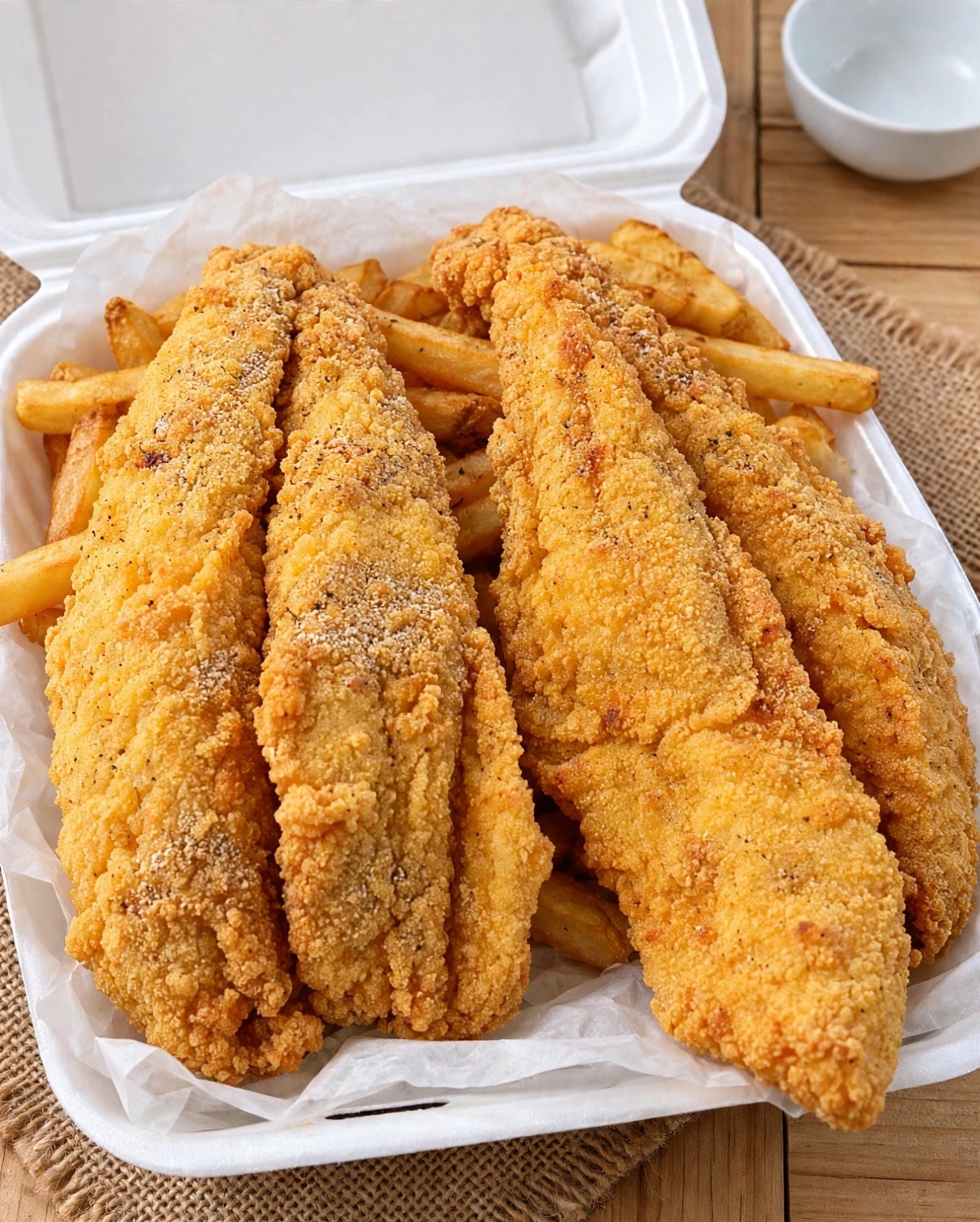
Fried Catfish
Fried catfish is a beloved Southern comfort food known for its crisp, golden cornmeal coating and tender, flaky fish. The outside turns beautifully crunchy while the catfish inside stays moist and mild. A simple buttermilk soak, seasoned breading, and hot oil create the classic flavor and texture that make this dish a favorite at fish fries, family dinners, and weekend gatherings.
This homemade Fried Catfish recipe uses everyday ingredients and straightforward steps. You do not need a deep fryer or complicated equipment: a heavy skillet, a thermometer, and a few minutes of careful frying are enough. Serve the fish hot with lemon wedges, coleslaw, hush puppies, or your favorite Southern sides for a satisfying meal.
Prep Time: 15 minutes
Marinating Time: 20–30 minutes
Cook Time: 12–16 minutes
Total Time: About 50–60 minutes
Servings: 4
Ingredients
- 4 catfish fillets, about 5–6 ounces each
- 1 cup buttermilk
- 1 teaspoon hot sauce, optional
- 1 teaspoon kosher salt, divided
- 1 cup yellow cornmeal
- ½ cup all-purpose flour
- 1 teaspoon paprika
- 1 teaspoon garlic powder
- ½ teaspoon onion powder
- ½ teaspoon black pepper
- ½ teaspoon cayenne pepper, optional
- ½ teaspoon salt
- Neutral oil, such as canola or peanut oil, for frying
- Lemon wedges
- Chopped parsley, optional
Why You’ll Love This Recipe
- Crispy, flavorful crust: Cornmeal and flour create a crunchy coating with classic Southern seasoning.
- Tender fish: A short buttermilk soak helps keep the fillets moist and adds a gentle tang.
- Simple ingredients: Pantry spices and fresh catfish deliver plenty of flavor without a complicated marinade.
- Quick cooking: Once the oil is hot, each batch cooks in just a few minutes.
- Easy to customize: Adjust the heat, seasoning, or coating thickness to suit your table.
How to Make Fried Catfish
1. Prepare the Fish
Pat the catfish fillets dry with paper towels. If the fillets are very large, cut them into evenly sized pieces so they cook at the same rate. Sprinkle both sides with a little of the measured salt.
2. Soak in Buttermilk
In a shallow dish, whisk together the buttermilk and hot sauce, if using. Add the fillets and turn to coat. Refrigerate for 20–30 minutes. This brief soak adds flavor and helps the coating adhere; avoid leaving the fish in the mixture for hours because the texture can become too soft.
3. Mix the Coating
In a wide shallow bowl, combine the cornmeal, flour, paprika, garlic powder, onion powder, black pepper, cayenne, and remaining salt. Stir until the spices are evenly distributed. The cornmeal provides crunch, while the flour helps the crust cling to the fish.
4. Heat the Oil
Pour about ½ inch of neutral oil into a heavy skillet or Dutch oven. Heat over medium to medium-high heat until it reaches 350°F (175°C). Use a thermometer for accuracy. If the oil is too cool, the coating can absorb excess grease; if it is too hot, the crust may brown before the fish cooks through.
5. Coat the Fillets
Lift one fillet from the buttermilk and let excess liquid drip off. Press it into the cornmeal mixture, turning to coat every side. Gently shake off loose breading and place the coated fillet on a tray. Repeat with the remaining fish. For an extra-crunchy crust, let the coated fillets rest for 5 minutes before frying.
6. Fry in Batches
Carefully lower the fillets into the hot oil, leaving space between them. Fry for about 3–4 minutes per side, depending on thickness, until the coating is golden brown and the fish flakes easily. Avoid crowding the pan, which lowers the oil temperature and can make the crust soggy.
7. Drain and Serve
Transfer the cooked fillets to a wire rack set over a baking sheet. A rack keeps air circulating and preserves crispness better than paper towels. Let the oil return to 350°F before frying the next batch. Serve immediately with lemon wedges and your favorite sides.
Serving Suggestions
Serve this Southern-style fish with creamy coleslaw, hush puppies, French fries, or potato wedges for a classic fish-fry plate. For a lighter meal, pair it with collard greens, green beans, corn on the cob, or a crisp garden salad. Tartar sauce, remoulade, hot sauce, and lemon wedges make easy condiments.
For a casual gathering, arrange the fillets on a platter with lemon slices and parsley. Keep sauces on the side so the crunchy coating stays crisp. Fried Catfish also works well in sandwiches: place a fillet on a toasted bun with lettuce, pickles, and tartar sauce.
“Pair your meal with this Spinach Stuffed Flatbread with Yogurt-Herb Dip for a flavorful, satisfying side.”
Recipe Tips
- Dry the fish first: Excess moisture can prevent the breading from sticking evenly.
- Use a thermometer: Maintaining oil near 350°F is the key to a crisp, non-greasy crust.
- Fry in small batches: Crowding causes the temperature to drop and encourages steaming.
- Choose similarly sized fillets: Uniform thickness helps every piece finish at the same time.
- Use a wire rack: It allows excess oil to drain while keeping the underside crunchy.
- Season in layers: Lightly salt the fish and season the coating so every bite tastes balanced.
Easy Variations
- Spicy Cajun style: Add Cajun seasoning and extra cayenne to the cornmeal mixture. Reduce added salt if the blend is already salty.
- Gluten-free option: Replace the all-purpose flour with a certified gluten-free flour blend or additional fine cornmeal. The crust may be slightly more delicate.
- Extra-crunchy coating: Use a little more cornmeal than flour and press the coating firmly onto each fillet.
- Milder flavor: Skip the hot sauce and cayenne, then use paprika, garlic powder, and black pepper for a gentle seasoning.
- Air-fryer adaptation: Spray coated fillets generously with oil and cook in a preheated air fryer at 400°F, turning carefully halfway through. The texture will differ from skillet-fried fish, and cooking time depends on thickness and appliance.
Make-Ahead Instructions
For the best texture, fry the fish shortly before serving. You can prepare the seasoned cornmeal mixture up to several days ahead and store it in an airtight container. The buttermilk soak can be mixed in advance, but add the fish only shortly before cooking and keep it refrigerated.
If you need to serve a crowd, fry the fillets in batches and keep them on a wire rack in a 200°F oven for a short time while the remaining pieces cook. Avoid covering them tightly, since trapped steam softens the crust.
Storage and Freezing
Refrigerate leftovers in an airtight container within two hours of cooking. They are best eaten within 2–3 days. To reheat, place the fish on a wire rack over a baking sheet and warm in a 375°F oven until heated through and crisp, usually 8–12 minutes depending on thickness. An air fryer can also restore some crunch. Avoid reheating in the microwave if you want to preserve the crust.
For freezing, cool the cooked fillets completely, then freeze them in a single layer before transferring to a freezer-safe container or bag. Use within 2 months for best quality. Reheat from frozen in a 375°F oven, allowing extra time, until hot throughout. The coating may not be quite as crisp as freshly fried fish.
Nutrition Information
Approximate nutrition per serving, assuming four servings and moderate oil absorption:
- Calories: 420
- Protein: 31 g
- Carbohydrates: 30 g
- Fat: 19 g
- Saturated Fat: 3 g
- Sodium: 650 mg
Values vary with fillet size, oil absorption, and the amount of coating used.
Frequently Asked Questions
What kind of catfish is best for frying?
Farm-raised channel catfish is a popular choice because it has a mild flavor and tender texture. Choose fresh fillets that smell clean and have firm flesh.
Can I use frozen catfish?
Yes. Thaw it completely in the refrigerator, then pat it very dry before soaking and coating. Excess water can make the breading slide off.
How do I know when the fish is cooked?
The coating should be golden brown, and the flesh should turn opaque and flake easily. For a reliable check, the thickest part should reach 145°F (63°C) on a food thermometer.
Why is my coating falling off?
The fish may be too wet, the coating may not have been pressed on, or the oil may be too cool. Pat the fillets dry, let excess buttermilk drip off, press the breading firmly, and allow the coated fish to rest briefly before frying.
Can I make the coating without flour?
Yes. Use fine or medium-ground cornmeal alone, though the crust may be more crumbly. Press it firmly onto the fish and handle the fillets gently when turning.
Final Thoughts
A good plate of Fried Catfish depends on a few dependable techniques: dry the fillets, season the coating well, keep the oil hot, and avoid crowding the pan. The result is crisp, golden fish with a tender center—simple comfort food that fits weeknight dinners and relaxed gatherings alike. Serve it fresh with bright lemon and classic sides for a satisfying Southern-inspired meal.