
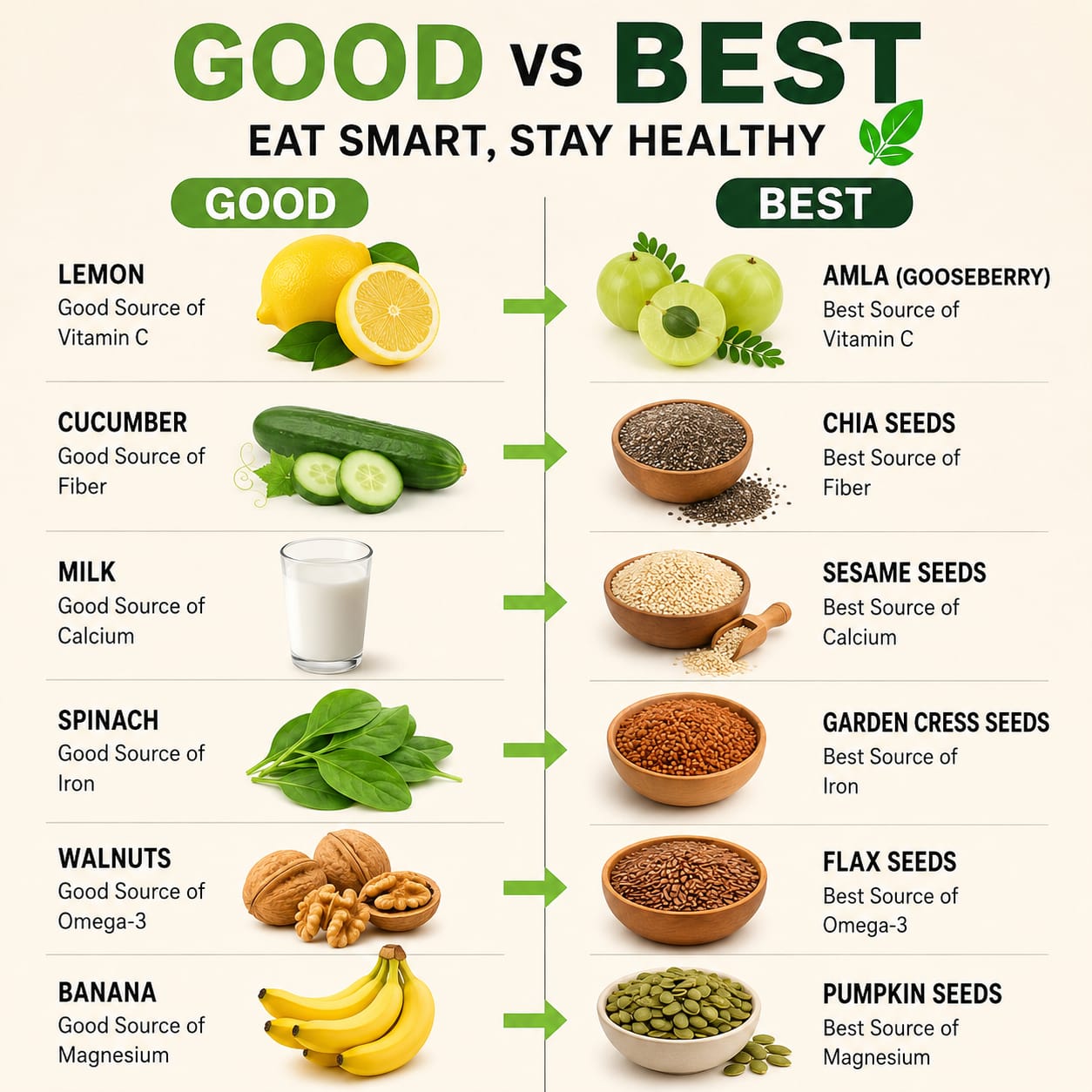
Best Natural Food Sources for Essential Nutrients
Many healthy foods contain important nutrients, but some foods are far more concentrated and effective than others. Here’s a simple comparison of “good” vs “best” natural sources for key nutrients and why they stand out.
1. Vitamin C
Lemon is Good — Gooseberry (Amla) is Best
Why Lemon is Good
Lemons provide vitamin C, antioxidants, and help support immunity and digestion.
Why Gooseberry (Amla) is Better
Amla contains much higher vitamin C levels than lemon and also has powerful antioxidants that support skin, hair, and immunity.
Health Benefits
Boosts immune system
Supports glowing skin
Helps collagen production
Improves digestion
May reduce inflammation
How to Use:
Eat fresh Gooseberry
Drink Gooseberry juice
Add Gooseberry powder to smoothies
Use lemon in water or salads
How It Works:
Vitamin C helps protect body cells from damage and supports white blood cells that fight infections.
2. Fiber
Cucumber is Good — Chia Seeds are Best
Why Cucumber is Good
Cucumber hydrates the body and contains some fiber.
Why Chia Seeds are Better
Chia seeds are loaded with soluble fiber, protein, and omega-3 fats.
Health Benefits
Improves digestion
Keeps you full longer
Supports weight management
Helps gut health
Supports heart health
How to Use
Soak 1–2 tablespoons in water
Add to yogurt or smoothies
Make chia pudding
How It Works
Fiber absorbs water and forms a gel that supports healthy digestion and bowel movement.
3. Calcium
Milk is Good — Sesame Seeds are Best
Why Milk is Good
Milk contains calcium and protein important for bones.
Why Sesame Seeds are Better
Sesame seeds are extremely rich in calcium and also contain magnesium, zinc, and healthy fats.
Health Benefits
Strengthens bones and teeth
Supports muscles
Helps nerve function
May improve joint health
How to Use
Sprinkle on salads
Add to smoothies
Eat tahini or sesame paste
How It Works
Calcium supports bone density and muscle contraction.
4. Iron
Spinach is Good — Garden Cress Seeds are Best
Why Spinach is Good
Spinach contains iron, folate, and antioxidants.
Why Garden Cress Seeds are Better
Garden cress seeds (halim seeds) are extremely rich in iron and are often used traditionally to support low energy and weakness.
Health Benefits
Supports healthy blood
Helps energy production
May reduce tiredness
Supports women’s health
How to Use
Soak seeds overnight
Add to milk or smoothies
Mix with honey
How It Works
Iron helps carry oxygen through the blood to all body tissues.
5. Omega-3
Walnuts are Good — Flax Seeds are Best
Why Walnuts are Good
Walnuts contain healthy fats and antioxidants.
Why Flax Seeds are Better
Flax seeds are one of the richest plant sources of omega-3 fatty acids and fiber.
Health Benefits
Supports heart health
Helps brain function
Supports skin health
May reduce inflammation
How to Use
Grind before eating
Add to oatmeal or smoothies
Sprinkle on yogurt
How It Works
Omega-3 fats help reduce inflammation and support brain and heart function.
6. Magnesium
Banana is Good — Pumpkin Seeds are Best
Why Banana is Good
Bananas provide magnesium, potassium, and natural energy.
Why Pumpkin Seeds are Better
Pumpkin seeds contain far more magnesium plus zinc, iron, and healthy fats.
Health Benefits
Supports muscles and nerves
Helps sleep quality
Supports heart health
Helps reduce fatigue
How to Use
Eat roasted pumpkin seeds
Add to salads or oatmeal
Blend into smoothies
How It Works
Magnesium supports muscle relaxation, energy production, and nervous system balance.
Note:
No single food provides everything your body needs. A balanced diet with fruits, vegetables, seeds, nuts, proteins, and healthy hydration is the best approach. People with medical conditions or allergies should consult a healthcare professional before making major dietary changes.