
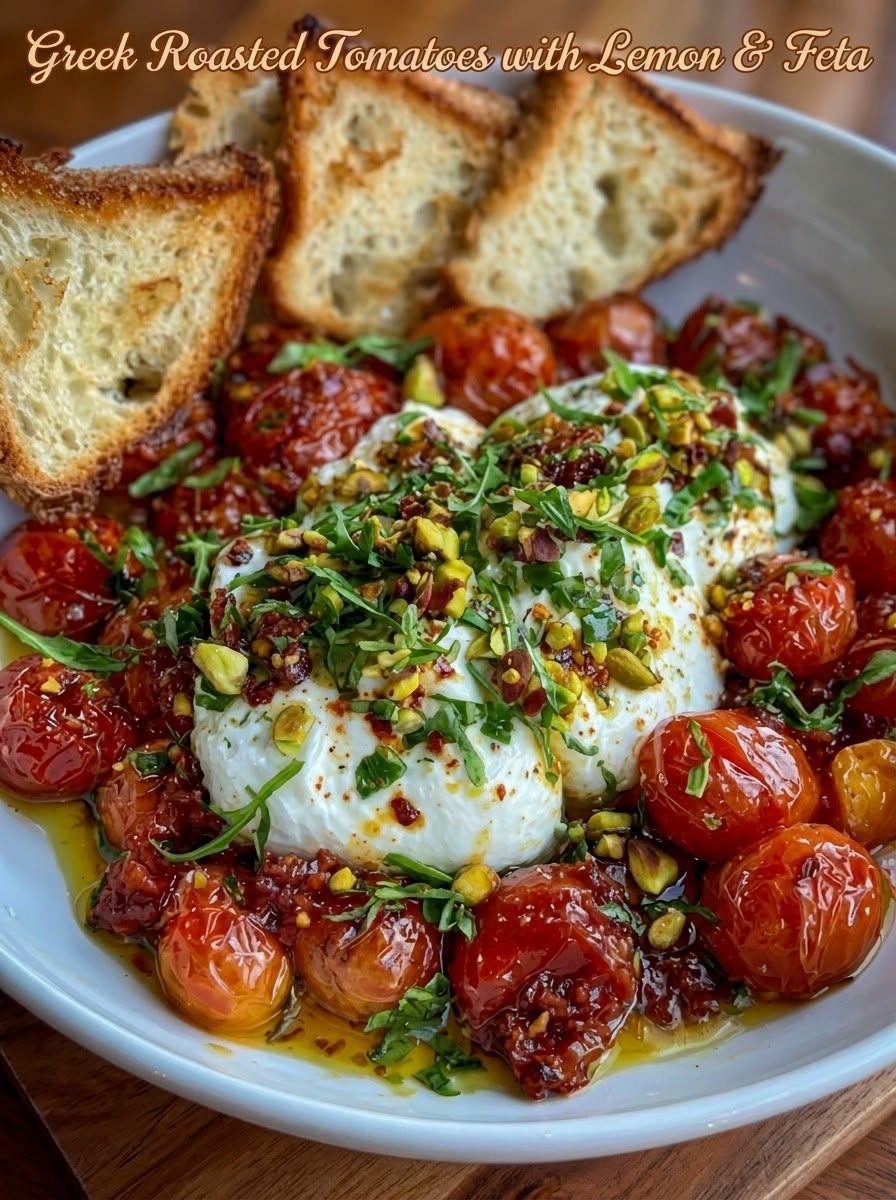
Greek Roast Tomatoes with Lemon and Feta
Description
There are some side dishes that quietly sit next to the main course, and then there are side dishes that steal the entire show. These Greek Roast Tomatoes with Lemon and Feta definitely belong in the second category.
Juicy ripe tomatoes are roasted until their edges become beautifully caramelized and slightly blistered while the centers turn tender and intensely flavorful. Fresh lemon juice and zest brighten the tomatoes, while creamy, salty feta melts slightly into the warm juices. A drizzle of extra-virgin olive oil, fragrant oregano, garlic, and fresh herbs brings everything together with classic Mediterranean flavor.
This recipe is incredibly simple, but the result tastes like something you would order at a beautiful Greek restaurant. It works wonderfully alongside grilled chicken, fish, shrimp, lamb, steak, or roasted vegetables. You can also serve the tomatoes over toasted bread, spoon them over grains, or enjoy them as a light vegetarian lunch.
The combination of sweet roasted tomatoes, tangy lemon, salty feta, and earthy oregano creates a side dish that is fresh, comforting, colorful, and incredibly easy to make.
Recipe Information
Prep Time: 10 minutes
Cook Time: 25–30 minutes
Total Time: 35–40 minutes
Servings: 4
Cuisine: Greek / Mediterranean
Course: Side Dish
Difficulty: Easy
Ingredients
For the Roasted Tomatoes
2 lbs ripe tomatoes, preferably Roma, vine-ripened, or cherry tomatoes
4 ounces feta cheese, crumbled
2 tablespoons extra-virgin olive oil
3 cloves of garlic, finely minced
1 lemon
1 teaspoon dried Greek oregano
1/2 teaspoon sea salt
1/4 teaspoon freshly ground black pepper
1/4 teaspoon red pepper flakes, optional
2 tablespoons fresh parsley, chopped
1 tablespoon fresh dill, chopped, optional
Optional Garnishes
Extra crumbled feta
Fresh oregano
Fresh parsley
Freshly cracked black pepper
A drizzle of extra-virgin olive oil
Lemon wedges
Toasted sesame seeds
Instructions
Step 1: Preheat the Oven
Preheat your oven to 425°F (220°C).
A hot oven is important because it allows the tomatoes to roast quickly, caramelize around the edges, and release their natural juices without becoming completely mushy.
Lightly grease a large baking dish or rimmed baking sheet with a little olive oil.
Step 2: Prepare the Tomatoes
Wash and dry the tomatoes thoroughly.
If using large tomatoes, cut them into halves or thick wedges. If using cherry tomatoes, leave them whole or cut them in half depending on their size.
Arrange the tomatoes in a single layer in your baking dish or on the baking sheet.
Avoid overcrowding the tomatoes. Giving them enough space allows the moisture to evaporate and encourages better browning.
Step 3: Add the Garlic and Seasonings
Scatter the minced garlic evenly over the tomatoes.
Drizzle the olive oil over everything, then sprinkle with oregano, salt, black pepper, and red pepper flakes if using.
Toss gently until the tomatoes are evenly coated.
Be careful with the salt because feta cheese is naturally salty. You can always add more seasoning after roasting.
Step 4: Add the Lemon
Wash the lemon well and finely grate about 1 teaspoon of lemon zest.
Cut the lemon in half and squeeze approximately 1–2 tablespoons of fresh lemon juice over the tomatoes.
For the best flavor, use freshly squeezed lemon juice rather than bottled lemon juice.
The lemon adds acidity that balances the sweetness of the roasted tomatoes and richness of the feta.
Step 5: Roast the Tomatoes
Place the tomatoes in the preheated oven and roast for approximately 20–25 minutes.
The tomatoes should become tender, slightly blistered, and caramelized around the edges.
If using cherry tomatoes, begin checking them around the 18-minute mark because they may cook more quickly.
For deeper caramelization, turn the oven to broil for the final 1–2 minutes. Watch carefully because the tomatoes can brown quickly under the broiler.
Step 6: Add the Feta
Remove the baking dish from the oven.
Scatter the crumbled feta evenly over the warm tomatoes.
Return the dish to the oven for another 3–5 minutes, just until the feta becomes warm and slightly softened.
You do not need to completely melt the feta. Greek feta is best when it remains creamy and crumbly while soaking up some of the flavorful tomato juices.
Step 7: Finish with Fresh Herbs
Remove the roasted tomatoes from the oven and let them rest for 3–5 minutes.
Sprinkle with fresh parsley and dill if using.
Add a little extra lemon zest, freshly cracked black pepper, and another small drizzle of extra-virgin olive oil.
Serve warm with lemon wedges on the side.
Notes
Tomato variety makes a difference in this recipe. Choose tomatoes that are ripe, fragrant, and naturally sweet.
Roma tomatoes produce a slightly firmer roasted result, while vine-ripened tomatoes become exceptionally juicy. Cherry and grape tomatoes are especially convenient and develop wonderful caramelized edges.
Because feta is salty, start with a modest amount of salt and adjust after cooking.
If your tomatoes are extremely juicy, you can roast them for an additional 5–10 minutes to allow more liquid to evaporate.
The tomato juices mixed with olive oil, lemon, garlic, and feta create a delicious natural sauce. Do not throw it away.
Tips for the Best Greek Roast Tomatoes
Use Ripe Tomatoes
The better the tomatoes, the better the final dish. Choose tomatoes that are ripe but still firm enough to hold their shape during roasting.
Do Not Overcrowd the Pan
A crowded baking dish traps steam. This causes the tomatoes to soften without developing those delicious roasted edges.
Use a large baking sheet if necessary.
Use Fresh Lemon
Fresh lemon juice and zest provide a brighter Mediterranean flavor than bottled lemon juice.
Add Feta Near the End
Adding feta during the final few minutes keeps it creamy instead of allowing it to dry out.
Don’t Skip the Garlic
Garlic becomes mellow and slightly sweet as it roasts, making it one of the most important flavor components in this recipe.
Finish with Fresh Herbs
Fresh parsley or dill added after roasting gives the dish a bright, fresh finish that balances the rich roasted flavors.
Serving Suggestions
These Greek Roast Tomatoes make an excellent side dish for almost any Mediterranean-inspired meal.
Serve them alongside:
Grilled chicken breast
Greek lemon chicken
Grilled salmon
Baked cod
Garlic shrimp
Grilled lamb chops
Roasted potatoes
Chicken souvlaki
Turkey meatballs
Grilled vegetables
Warm pita bread
Cooked quinoa or rice
For a simple vegetarian meal, spoon the roasted tomatoes and feta over toasted whole-grain bread and finish with fresh herbs.
You can also serve them over couscous, quinoa, farro, or orzo for a satisfying grain bowl.
Recipe Variations
Greek Cherry Tomato Version
Use 2 lbs of cherry tomatoes instead of larger tomatoes. Roast them whole or halved until blistered and juicy.
Spicy Greek Tomatoes
Increase the red pepper flakes or add a pinch of crushed chili peppers for a gentle kick.
Olive Version
Add 1/3 cup pitted Kalamata olives during the final 10 minutes of roasting for extra Greek flavor.
Onion and Tomato Version
Add thinly sliced red onion before roasting. The onion becomes sweet and caramelized alongside the tomatoes.
Mediterranean Herb Version
Add fresh thyme, rosemary, parsley, or additional oregano depending on your preference.
Balsamic Version
For a slightly sweeter variation, add a small drizzle of balsamic glaze immediately before serving.
Creamy Version
Serve the roasted tomatoes over a spoonful of whipped feta or plain Greek yogurt for an extra creamy presentation.
Make-Ahead Instructions
You can prepare the tomatoes and seasonings several hours before cooking.
Store the prepared tomatoes covered in the refrigerator until you are ready to roast them.
For the best texture, add the feta during the final few minutes rather than adding it ahead of time.
The dish can also be completely prepared in advance and gently reheated before serving.
Storage
Store leftover Greek Roast Tomatoes in an airtight container in the refrigerator for up to 3 days.
The tomatoes will become softer after refrigeration, but the flavors remain delicious.
Reheat gently in a 350°F (175°C) oven until warmed through, or microwave individual portions for approximately 30–60 seconds.
For the best texture, add a little fresh parsley, lemon zest, or feta after reheating.
Nutritional Information
Approximate nutrition per serving:
Calories: 190
Protein: 6 g
Carbohydrates: 12 g
Fat: 14 g
Saturated Fat: 5 g
Fiber: 3 g
Sugar: 7 g
Sodium: 500 mg
Nutritional values are estimates and can vary depending on the tomatoes, feta, olive oil, and exact quantities used.
Benefits
Rich in Lycopene
Tomatoes are an excellent source of lycopene, a naturally occurring antioxidant. Cooking tomatoes can make lycopene more available for the body to absorb.
Provides Vitamin C
Tomatoes and fresh lemon contribute vitamin C, which supports normal immune function and helps with collagen production.
Contains Healthy Fats
Extra-virgin olive oil provides predominantly monounsaturated fats and is a staple ingredient in Mediterranean-style cooking.
Provides Protein and Calcium
Feta contributes protein and calcium while adding its characteristic salty, creamy flavor.
Vegetable-Rich Side Dish
This recipe makes it easy to add more vegetables to your meal without requiring a complicated preparation.
Naturally Flavorful
Fresh lemon, garlic, oregano, tomatoes, olive oil, and feta provide plenty of flavor without requiring a heavy sauce.
Frequently Asked Questions
Can I use cherry tomatoes?
Yes. Cherry tomatoes are one of the best choices for this recipe. They roast quickly and develop beautifully blistered skins.
Can I use crumbled feta?
Absolutely. Crumbled feta makes the recipe very easy to prepare. You can also use a block of feta and crumble it yourself.
Can I use another cheese?
Yes. Goat cheese can work beautifully, although it will give the dish a different flavor. Ricotta salata is another Mediterranean-inspired option.
Why did my tomatoes become watery?
Tomatoes naturally contain a lot of water. If the baking dish is overcrowded, they will steam rather than roast. Use a large pan and roast at a high temperature to encourage caramelization.
Can I make this recipe without garlic?
Yes. The garlic adds wonderful flavor, but the tomatoes will still be delicious without it.
Can I make this recipe dairy-free?
Yes. Simply leave out the feta or use a suitable dairy-free feta alternative.
Can I use dried herbs instead of fresh?
Yes. Dried oregano works especially well here. If substituting dried parsley or dill for fresh, use a smaller amount because dried herbs have a more concentrated flavor.
Can I roast the tomatoes at a lower temperature?
You can, but 425°F (220°C) helps create the caramelized edges that make this recipe special. At a lower temperature, the tomatoes may take longer and become softer before developing much browning.
What should I do with the leftover tomato juices?
Save them! The juices are packed with flavor from the garlic, olive oil, lemon, oregano, and feta. Spoon them over bread, rice, pasta, or roasted vegetables.
Is this recipe good for meal prep?
Yes. It can be prepared ahead and stored in the refrigerator. For the freshest flavor, add a little lemon juice and fresh herbs just before serving.
Final Thoughts
These Greek Roast Tomatoes with Lemon and Feta are proof that a simple side dish can be unforgettable. Roasting concentrates the natural sweetness of the tomatoes while garlic and oregano add savory depth. Fresh lemon keeps everything bright, and creamy feta brings the perfect salty finish.
Serve them alongside your favorite grilled protein, spoon them over warm grains, or pile them onto toasted bread for a simple Mediterranean-inspired meal.
And don’t be surprised if everyone starts reaching for the side dish before the main course is finished. These tomatoes may look simple, but once they hit the table, they have a way of becoming the star.