
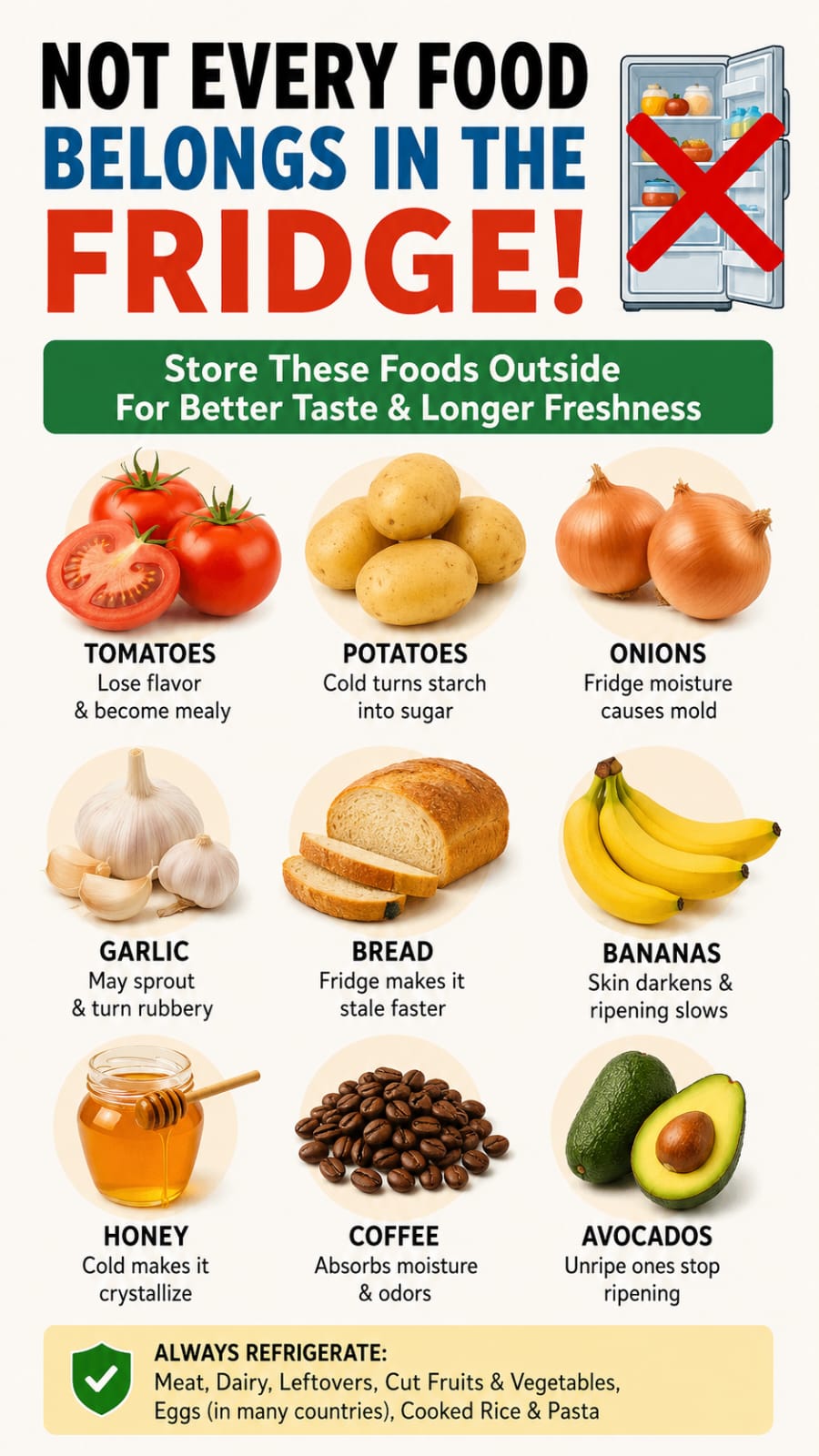
Why Refrigerating Some Foods Might Be a Mistake
Not every food belongs in the refrigerator!
Some foods actually lose flavour, become mushy, dry out, or spoil faster when stored in cold temperatures.
From tomatoes and potatoes to bread and honey, proper storage can help foods stay fresher, tastier, and safer for longer. Learn which foods are better kept outside the fridge and why!
Many people believe the refrigerator is the safest place for all foods, but some foods actually lose flavor, texture, nutrients, or spoil faster when stored in cold temperatures. In some cases, refrigeration can even increase moisture buildup, mold growth, or unpleasant taste changes.
Here’s a detailed guide to foods that are often better stored outside the fridge and why:
1. Tomatoes:
Why Refrigeration Can Be a Mistake:
Cold temperatures damage the membranes inside tomatoes, making them:
Mealy or mushy
Less juicy
Less flavorful
The fridge slows the ripening process and weakens their natural sweetness.
Best Storage:
Keep whole tomatoes at room temperature
Store away from direct sunlight
Refrigerate only if already overripe
Exception
Cut tomatoes should be refrigerated and used quickly for food safety.
2. Potatoes:
Why Refrigeration Is Risky
Cold temperatures convert potato starch into sugar faster. This may:
Change the taste
Make potatoes overly sweet
Cause dark coloration during cooking
Increase acrylamide formation when fried at high heat
Best Storage:
Cool, dark, dry place
Paper bag or basket with airflow
Avoid sealed plastic bags
3. Onions:
Why Refrigeration Can Cause Problems
Fridge moisture can make onions:
Soft
Moldy
Slimy
Cold, humid air shortens their shelf life.
Best Storage:
Dry ventilated area
Mesh bag or open basket
Keep away from potatoes
Exception
Cut onions should be refrigerated in a sealed container.
4. Garlic:
Why the Fridge Isn’t Ideal
Refrigeration may:
Encourage sprouting
Cause rubbery texture
Increase moisture and mold
Best Storage:
Cool dry pantry
Good airflow
Avoid plastic containers
5. Bread:
Why Refrigeration Makes Bread Worse
The refrigerator speeds up staling because cold temperatures crystallize the starches.
Bread becomes:
Dry
Hard
Chewy
Best Storage:
Bread box or sealed bag at room temperature
Freeze for long-term storage instead
6. Bananas:
Why Refrigeration Is Often a Mistake
Cold temperatures slow ripening and blacken the peel.
The inside may remain edible, but:
Texture changes
Flavor development slows
Appearance becomes unappetizing
Best Storage:
Room temperature
Hanging banana hook if possible
7. Honey:
Why Refrigeration Is Unnecessary
Cold temperatures make honey crystallize faster and become thick or grainy.
Best Storage:
Tightly sealed jar
Room temperature pantry
Honey naturally has a long shelf life.
8. Coffee:
Why the Fridge Can Ruin Coffee
Coffee absorbs:
Moisture
Odors
Condensation
This weakens aroma and flavor.
Best Storage:
Airtight container
Cool dark cabinet
9. Avocados:
Why Refrigeration Can Be a Problem
Unripe avocados stop ripening properly in cold temperatures.
Best Storage:
Counter-top until ripe
Refrigerate only after ripening
Important Food Safety Reminder:
Some foods SHOULD always be refrigerated after cutting, cooking, or opening, including:
Meat
Dairy products
Leftovers
Cut fruits and vegetables
Eggs (in many countries)
Cooked rice and pasta
Food safety always comes first. Storage advice can vary depending on climate, humidity, and local food practices.
Common Reasons Refrigeration Can Be Harmful:
1. Moisture Build-Up
Can lead to mold, softness, or spoilage.
2. Texture Damage
Cold air changes starches and cell structures.
3. Flavor Loss
Some foods lose aroma and sweetness in cold temperatures.
4. Faster Staling
Especially true for bread and baked goods.
5. Premature Ripening Problems
Some fruits stop ripening naturally.
Best Practice Tips:
Read storage labels when available
Use breathable baskets for produce
Keep pantry cool and dry
Refrigerate cut or cooked foods promptly
Avoid overcrowding the fridge for better airflow