
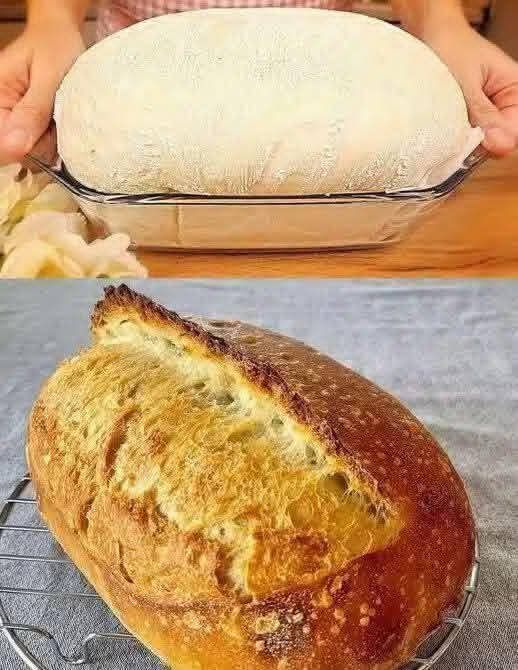
🍞 Everyday Sourdough Sandwich Loaf
This recipe is designed for a standard 9×5 inch glass loaf pan. It produces a soft, manageable crumb that is perfect for sandwiches and toast.
🥣 Ingredients
-
Active Sourdough Starter: 100g (fed and bubbly)
-
Warm Water: 350g
-
Bread Flour: 500g (provides the best structure)
-
Sea Salt: 10g
-
Olive Oil or Melted Butter: 20g (optional, for a softer “sandwich” crumb)
📝 Instructions
1. Mix & Autolyse
In a large bowl, whisk your starter and water until milky. Add the flour and salt (and oil if using). Mix until a shaggy dough forms and no dry flour remains. Cover and let rest for 30–45 minutes.
2. Strengthen (Stretch & Folds)
Perform 3–4 sets of “stretches and folds” every 30 minutes. Reach under the dough, pull it up, and fold it over itself. Rotate the bowl and repeat 4 times per set. This builds the gluten strength shown in your “before” image.
3. Bulk Fermentation
Cover the bowl with a damp cloth or plastic wrap. Let it sit at room temperature until it has grown by about 50–75% in volume. This usually takes 6–10 hours depending on your kitchen’s temperature.
4. Shape & Pan
Turn the dough onto a lightly floured surface. Gently shape it into a log (batard) by folding the sides in and rolling it up tightly.
Tip: Lightly grease your glass pan with butter or line it with parchment paper to prevent sticking. Place the dough seam-side down.
5. Second Proof
Cover the pan. Let the dough rise until it is about 1 inch above the rim of the pan (as seen in the top half of your image). This usually takes 2–4 hours.
6. The Bake
-
Preheat oven to 400°F (205°C).
-
Score: Use a sharp blade to make one long slash down the center.
-
Bake: Bake for 40–45 minutes. If using glass, keep an eye on the bottom; if it browns too fast, move it to a higher rack.
-
Cool: Remove from the pan immediately and cool on a wire rack for at least 1 hour before slicing.
💡 Tips for Success
-
Temperature Control: Glass holds heat differently than metal. If the crust is getting too dark but the inside isn’t done, tent it with foil for the last 10 minutes.
-
The “Jiggle” Test: Before baking, the dough should feel airy and jiggle like jelly when you shake the pan.
-
Steam: For a crust like the one in your photo, place a small pan of water on the bottom rack of the oven during the first 15 minutes of baking.
📊 Nutritional Info & Benefits
Servings: 1 Loaf (approx. 12–15 slices)
| Nutrient | Per Slice (approx.) |
| Calories | 130 kcal |
| Carbohydrates | 26g |
| Protein | 4g |
| Fat | 0.5g |
| Fiber | 1.5g |
Key Benefits:
-
Digestibility: The long fermentation breaks down gluten and phytic acid, making it easier on the gut.
-
Lower Glycemic Index: Sourdough causes a slower rise in blood sugar compared to commercial white bread.
-
No Preservatives: You control every ingredient—no “dough conditioners” or hidden sugars.
❓ Common Q&A
Q: Why did my bread burst at the bottom?
A: This usually means the dough was “under-proofed” (didn’t rise enough in the pan) or the score on top wasn’t deep enough to let the steam escape.
Q: Can I use a metal pan instead of glass?
A: Absolutely. Metal heats up faster, so you might get a slightly crispier crust, but the recipe remains the same.
Q: My starter isn’t floating. Can I still bake?
A: If it’s bubbly and smells yeasty, it’s likely fine! The “float test” is a guide, not a law. Just give it a little more time to rise.