
Traditional Greek Salad – Fresh, Easy & Authentic Mediterranean Recipe
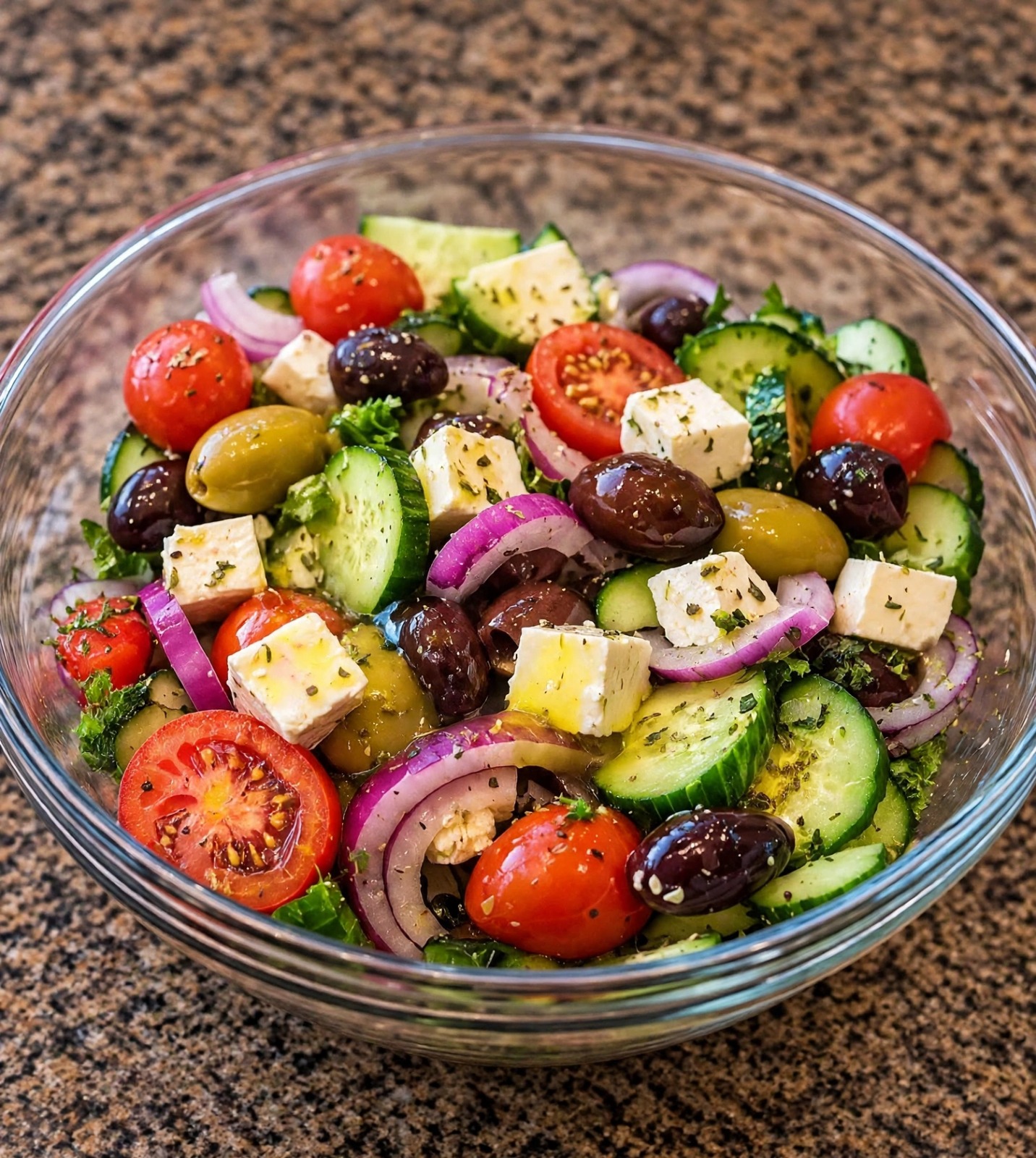
A traditional Greek salad is a celebration of simple Mediterranean ingredients. Juicy ripe tomatoes, crisp cucumber, sharp red onion, briny Kalamata olives, and creamy feta come together with extra-virgin olive oil and dried oregano. There is no complicated cooking, no long ingredient list, and no heavy dressing to hide the natural flavors. Every bite is fresh, colorful, and satisfying.
This classic Greek Salad is often called Horiatiki, or village salad. It features chunky vegetables, a slab of feta, olive oil, and oregano rather than a heavy dressing.
Serve Greek Salad with grilled fish, chicken, lamb, or warm pita. It suits summer meals, and takes about 15 minutes to prepare.
Choose ripe tomatoes, firm cucumber, quality olives, and sheep’s milk feta if available. Assemble this Greek Salad shortly before serving for the freshest texture.
Prep Time: 15 minutes
Cook Time: 0 minutes
Total Time: 15 minutes
Servings: 4
Ingredients
For the Salad
- 4 ripe medium tomatoes: Cut flavorful, firm tomatoes into wedges or large chunks.
- 1 large cucumber: Use an English or firm garden cucumber, partially peeled if needed, and cut into half-moons.
- ½ small red onion: Thinly sliced for a balanced onion flavor.
- ¾ cup Kalamata olives: Use whole or pitted olives for a rich, briny flavor.
- 6 ounces block feta cheese: Cut into thick slabs or leave whole for a traditional presentation.
- 1 small green bell pepper (optional): Thinly sliced for extra crunch.
- 1 teaspoon dried Greek oregano: Rub between your fingers to release its aroma.
For the Simple Dressing
A light dressing keeps Greek Salad fresh. A traditional Greek Salad needs no cooking.
- 3 tablespoons extra-virgin olive oil: Use a flavorful, good-quality oil.
- 1 tablespoon red wine vinegar: Adds acidity and balances the rich ingredients.
- ¼ teaspoon dried oregano: Reinforces the Mediterranean flavor.
- A pinch of sea salt: Add sparingly because feta and olives are salty.
- Freshly ground black pepper: Adds a mild bite.
Why You’ll Love This Recipe
This Greek Salad is colorful and refreshing.
- No cooking required: Chop, arrange, dress, and serve. It is ideal when you want a fresh side without turning on the oven.
- Simple ingredients: Each ingredient has a clear purpose, so quality matters more than complicated technique.
- Fresh and colorful: The combination of red tomatoes, green cucumber, purple onion, dark olives, and white feta looks beautiful on the table.
- Easy to pair: It complements grilled meats, seafood, sandwiches, wraps, and vegetarian meals.
- Naturally adaptable: You can adjust the vegetables and seasoning while keeping the classic Mediterranean spirit.
A good Greek Salad lets ripe produce, briny olives, tangy feta, oregano, and olive oil shine without unnecessary additions.
How to Make Greek Salad
1. Prepare the Vegetables
Wash and dry the vegetables. Cut tomatoes into wedges, cucumber into thick half-moons, and bell pepper into thin strips.
Slice the onion thinly. If it tastes very sharp, soak it in cold water for 5 minutes, then drain and pat dry.
2. Arrange the Salad
Chunky cuts give Greek Salad its rustic character.
Place tomatoes and cucumber in a wide bowl or shallow platter. Add onion, bell pepper, and olives, then toss gently.
Traditional Greek Salad uses generous vegetable pieces, creating its recognizable rustic appearance.
3. Mix the Dressing
Whisk together olive oil, red wine vinegar, oregano, black pepper, and a small pinch of salt. Taste before adding more salt because feta and olives are already salty.
Alternatively, drizzle the oil and vinegar directly over the vegetables. Use just enough to lightly coat them.
4. Add the Feta
Block feta is traditional in Greek Salad.
Place the feta block or thick slices over the vegetables instead of crumbling it throughout the bowl.
Sprinkle with oregano and black pepper for a creamy, tangy contrast to the crisp vegetables.
5. Dress and Serve
Drizzle the dressing over the vegetables and feta just before serving, keeping the feta mostly intact.
Taste and adjust the seasoning if needed. Serve Greek Salad with crusty bread or warm pita.
Serving Suggestions
Fresh flavors make Greek Salad a versatile side.
This salad pairs naturally with grilled chicken, lamb kebabs, pork souvlaki, baked fish, or grilled shrimp. Its bright dressing balances smoky main dishes.
For lunch, serve Greek Salad with warm pita, hummus, tzatziki, or grilled halloumi. It also complements vegetable skewers and lentils.
For a larger spread, pair it with roasted vegetables, rice pilaf, or lemon potatoes. Dress just before serving.
For a more filling Mediterranean-inspired meal, serve this fresh salad alongside Cranberry-Apple Stuffed Chicken Breasts with Spinach, Brie & Orange-Pecan Glaze featuring juicy chicken breasts filled with spinach, creamy Brie, sweet cranberries, and apples, finished with a delicious orange-pecan glaze.
Recipe Tips
A few details make Greek Salad taste its best.
- Choose ripe tomatoes: Good tomatoes provide much of the flavor and juice, so avoid pale or underripe ones.
- Keep the pieces chunky: Larger cuts preserve the traditional village-style appearance and stay crisp longer.
- Use block feta: It has a creamier texture and looks more authentic than finely crumbled feta.
- Do not overdress: Start with the suggested amount of oil and vinegar, then adjust after tasting.
- Season carefully: Olives and feta are salty, so add salt gradually.
- Dress just before serving: This helps prevent the vegetables from releasing too much liquid.
- Use quality olive oil: Its fruity flavor is noticeable in such a simple dressing.
Rinse sliced onion briefly in cold water for a milder flavor. For a sharper dressing, add red wine vinegar gradually.
Easy Variations
- Cucumber and tomato bowl: Increase the cucumber and tomatoes for an especially refreshing version.
- With capers: Add a teaspoon of rinsed capers for extra briny flavor.
- With fresh herbs: Add a little chopped parsley or mint for a fresh twist, while keeping oregano as the main seasoning.
- With grilled vegetables: Add cooled grilled zucchini or bell pepper for a heartier side.
- With chickpeas: Add rinsed chickpeas for extra substance, understanding that this makes the dish less traditional.
- With lemon: Replace some of the vinegar with fresh lemon juice for a brighter dressing.
For a classic presentation, keep the core ingredients unchanged and avoid adding lettuce, avocado, or sweet dressings. Those ingredients can make a tasty salad, but they move the dish away from the traditional village-style version. The simple combination is what gives Greek Salad its recognizable character.
Make-Ahead Instructions
Wash and dry the vegetables several hours ahead. Slice cucumber and onion, and prepare the dressing separately. Refrigerate components in covered containers.
For the freshest texture, cut tomatoes and assemble shortly before serving. If preparing Greek Salad for guests, arrange the vegetables on a covered platter and add feta and dressing at the last minute.
Storage and Freezing
Refrigerate leftover dressed salad in an airtight container and enjoy within 1 day; the vegetables will soften. Undressed vegetables can be stored separately for up to 2 days, with feta and dressing added before serving.
Freezing is not recommended because cucumber and tomatoes become watery after thawing. Prepare only as much as you plan to serve.
Nutrition Information
The following values are estimates per serving and will vary depending on the size of the vegetables, feta, olives, and amount of dressing used.
- Calories: 240
- Protein: 7g
- Carbohydrates: 10g
- Fat: 20g
- Fiber: 3g
- Sugar: 6g
- Sodium: 550mg
Nutrition varies with ingredient brands and portions, especially the feta, olives, and olive oil.
Frequently Asked Questions
Is traditional Greek salad made with lettuce?
A classic village-style version generally does not include lettuce. It focuses on tomatoes, cucumber, red onion, olives, and feta. Lettuce can be added if you enjoy it, but the result is a different style of salad.
Can I use crumbled feta instead of a block?
Yes. Crumbled feta works well if that is what you have. However, a block of feta placed on top gives the dish a more traditional appearance and a creamier bite.
What olives are best for this salad?
Kalamata olives are a popular choice because their rich, fruity, briny flavor pairs beautifully with tomatoes, cucumber, and feta. Use pitted olives if you prefer easier serving.
Can I make the dressing without vinegar?
Yes. Replace the red wine vinegar with fresh lemon juice. The flavor will be slightly different but still bright and delicious.
How do I stop the salad from becoming watery?
Use firm, ripe vegetables, dry them after washing, and add the dressing shortly before serving. Avoid salting the tomatoes too early because salt draws out moisture.
Can I serve this salad as a main meal?
Yes. Add grilled chicken, chickpeas, or warm pita to make it more substantial. For a traditional side dish, keep the original ingredient combination.
Final Thoughts
Fresh produce, good olive oil, briny olives, oregano, and creamy feta are all you need to make a memorable Mediterranean side. This Greek Salad is quick to prepare and serve, especially when vegetables are ripe and in season.
Keep the cuts generous, use a light hand with the dressing, and add the feta just before serving. Whether it is part of a summer lunch or a larger family dinner, this simple classic brings freshness and color to the table.
1 thought on “Traditional Greek Salad – Fresh, Easy & Authentic Mediterranean Recipe”