
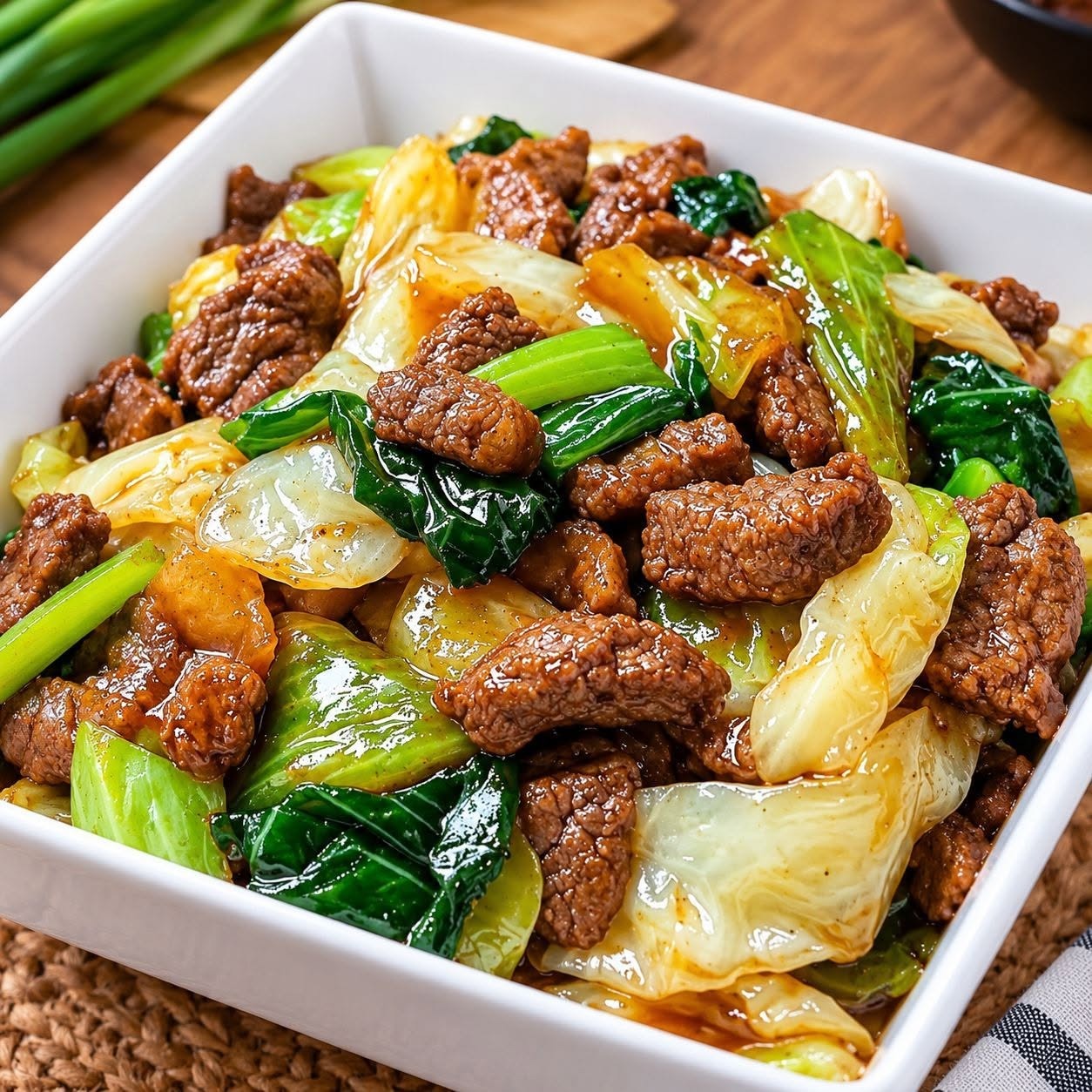
Beef & Bok Choy Stir-Fry
Description
Sizzling, savory, and colorful, and ready in minutes, this Beef & Bok Choy Stir-Fry is the perfect answer to busy weeknight dinner cravings. Tender strips of beef are quickly seared in a hot skillet and tossed with crisp-tender bok choy, garlic, ginger, and a delicious homemade stir-fry sauce.
The combination of juicy beef and fresh bok choy creates a satisfying contrast of textures. The beef develops beautifully browned edges while the bok choy stays slightly crisp, making every bite fresh and flavorful.
The sauce brings everything together with a savory combination of low-sodium soy sauce, sesame oil, garlic, ginger, and a touch of honey. A little cornstarch helps create a glossy coating that clings to the beef and vegetables without requiring a heavy sauce.
This recipe is perfect served over steamed rice, brown rice, cauliflower rice, or noodles. You can also enjoy it on its own for a lighter meal.
Best of all, the entire dish can be prepared quickly, making it ideal for those nights when you want a homemade dinner without spending hours in the kitchen.
Ingredients
For the Beef
1 lb lean beef steak, thinly sliced
1 tablespoon cornstarch
1 tablespoon low-sodium soy sauce
1 teaspoon sesame oil
½ teaspoon black pepper
1 tablespoon avocado oil or olive oil for cooking
For the Stir-Fry
4 cups baby bok choy, chopped
1 small yellow onion, thinly sliced
1 red bell pepper, thinly sliced
3 cloves of garlic, minced
1 tablespoon fresh ginger, grated
2 green onions, sliced
1 tablespoon sesame seeds, optional
For the Sauce
¼ cup low-sodium soy sauce
1 tablespoon honey
1 tablespoon rice vinegar
1 teaspoon sesame oil
1 teaspoon cornstarch
¼ cup water
½ teaspoon crushed red pepper flakes, optional
Instructions
1. Prepare the Beef
Place the thinly sliced beef in a medium bowl.
Add the cornstarch, low-sodium soy sauce, sesame oil, and black pepper.
Toss until the beef is evenly coated.
Allow the beef to rest for approximately 5–10 minutes while you prepare the vegetables and sauce.
For the most tender beef, slice it thinly against the grain. This shortens the muscle fibers and makes the meat easier to chew.
2. Prepare the Sauce
In a small bowl, whisk together the low-sodium soy sauce, honey, rice vinegar, sesame oil, cornstarch, and water.
If you like spicy food, add the crushed red pepper flakes.
Whisk until the cornstarch is completely dissolved.
Set the sauce aside.
3. Prepare the Vegetables
Wash the bok choy thoroughly, especially around the base where dirt can collect.
If using baby bok choy, cut each head in half or quarters depending on its size.
Slice the onion and bell pepper.
Mince the garlic and grate the fresh ginger.
Keep the vegetables close to the stove because stir-frying moves quickly.
4. Heat the Pan
Place a large wok or skillet over high heat.
Allow it to become very hot before adding the oil.
Add the avocado oil or olive oil and swirl to coat the pan.
A very hot cooking surface helps the beef brown quickly instead of releasing too much liquid and steaming.
5. Cook the Beef
Add the beef to the hot pan in a single layer.
Avoid overcrowding the pan. If necessary, cook the beef in two batches.
Sear the beef for approximately 1–2 minutes per side, depending on the thickness of the slices.
The outside should develop browned edges while the inside remains tender.
Transfer the cooked beef to a clean plate and set aside.
6. Stir-Fry the Vegetables
Add the sliced onion and bell pepper to the same skillet.
Stir-fry for approximately 2 minutes.
Add the minced garlic and grated ginger.
Cook for another 30–45 seconds until fragrant.
Be careful not to burn the garlic.
7. Add the bok choy.
Add the chopped bok choy to the skillet.
Stir-fry for approximately 2–3 minutes.
The leaves should wilt while the thicker stems remain crisp-tender.
You don’t want to overcook the bok choy. Keeping some texture gives the finished stir-fry a much better bite.
8. Return the Beef
Add the cooked beef back to the skillet.
Give the prepared sauce another quick stir because the cornstarch may have settled at the bottom.
Pour the sauce over the beef and vegetables.
9. Finish the Stir-Fry
Toss everything together over high heat for approximately 1–2 minutes.
The sauce will quickly become glossy and slightly thickened, coating the beef and vegetables.
Once everything is hot and evenly coated, remove the skillet from the heat.
10. Garnish and Serve
Sprinkle the stir-fry with sliced green onions and sesame seeds.
Serve immediately over steamed white rice, brown rice, cauliflower rice, or your favorite noodles.
For extra freshness, add a small squeeze of lime juice before serving.
Notes
Thinly sliced beef works best for this recipe. Sirloin, flank steak, skirt steak, or another tender cut can be used.
For easier slicing, place the beef in the freezer for approximately 15–20 minutes before slicing. The slightly firm texture makes it easier to cut thin strips.
Always slice the beef against the grain for a more tender result.
Baby bok choy is particularly convenient because the leaves and stems are tender and cook quickly.
If using large bok choy, separate the stems from the leaves. Add the stems first because they take slightly longer to cook.
Low-sodium soy sauce is recommended because the sauce already contains naturally salty ingredients.
If you use regular soy sauce, you may want to reduce the amount slightly.
Tips for the Best Stir-Fry
Use a Very Hot Pan.
A hot skillet or wok is essential for achieving browned beef and crisp-tender vegetables.
Don’t Overcrowd the Pan
Too much food at once lowers the temperature and causes the ingredients to steam. Cook the beef in batches if needed.
Slice the Beef Thinly
Thin slices cook quickly and stay tender.
Prepare Everything First
Stir-frying happens quickly. Have your sauce, vegetables, garlic, ginger, and beef ready before you begin cooking.
Don’t Overcook the Bok Choy
Bok choy should be tender but still have some crunch, especially in the stems.
Add the Sauce at the End
Adding the sauce after the beef and vegetables are cooked helps prevent the ingredients from becoming overly soft.
Serve Immediately
Stir-fry tastes best when served straight from the skillet while the beef is hot and the vegetables still have texture.
Variations
Spicy Beef & Bok Choy
Add extra red pepper flakes, sliced fresh chili, or a little sriracha to the sauce.
Garlic Beef Stir-Fry
Add another clove or two of garlic for a stronger garlic flavor.
Beef & Broccoli
Replace some of the bok choy with broccoli florets.
Beef & Snow Peas
Add snow peas during the final few minutes of cooking for extra crunch.
Mushroom Beef Stir-Fry
Add sliced mushrooms with the onions and bell peppers.
Low-Carb Version
Serve the stir-fry over cauliflower rice or enjoy it on its own.
Ginger-Lime Beef
Add fresh lime zest and juice to the finished dish for a bright citrus flavor.
Honey-Garlic Beef
Increase the honey slightly and add additional minced garlic for a sweeter, richer sauce.
Serving Suggestions
Serve this Beef & Bok Choy Stir-Fry over steamed jasmine rice for a classic combination.
Brown rice is another excellent option if you prefer a nuttier flavor and more fiber.
For a lower-carbohydrate meal, serve it over cauliflower rice.
You can also serve it with rice noodles, soba noodles, or your favorite Asian-style noodles.
For extra vegetables, serve alongside steamed edamame, cucumber salad, or roasted broccoli.
A sprinkle of sesame seeds and sliced green onions adds both texture and visual appeal.
Servings
This recipe makes approximately 4 servings.
Serving size: approximately 1¼ cups of beef and vegetables, excluding rice or noodles.
Estimated Nutritional Information
Per serving, without rice or noodles, approximately:
Calories: 330–370
Protein: 32–36 g
Carbohydrates: 18–22 g
Fiber: 3–4 g
Sugar: 7–9 g
Fat: 15–18 g
Saturated Fat: 4–6 g
Sodium: 650–800 mg
Nutritional values are estimates and can vary depending on the cut of beef, soy sauce, amount of oil, and exact ingredient quantities.
Adding rice, noodles, or other toppings will change the nutritional values.
Benefits
High in Protein
Beef provides a substantial amount of protein, making this stir-fry a satisfying main dish.
Contains Vegetables
Bok choy, bell pepper, onion, garlic, and ginger add variety, fiber, vitamins, minerals, and plant compounds to the meal.
Quick Cooking
Because the beef is thinly sliced and the vegetables cook quickly, this meal can be prepared in a short amount of time.
Customizable
You can easily change the vegetables according to what you have available.
Balanced Meal
When served with a moderate portion of rice or another whole-food carbohydrate, the dish can provide protein, vegetables, and carbohydrates in one meal.
Homemade Sauce
Making your own sauce allows you to control the amount of honey, sodium, and other ingredients.
Frequently Asked Questions
What cut of beef is best for stir-fry?
Sirloin, flank steak, skirt steak, or another tender beef cut works well. The most important thing is slicing the meat thinly against the grain.
How do I make the beef tender?
Slice it thinly against the grain and avoid overcooking it. Cooking the beef quickly over high heat helps maintain a tender texture.
Can I use frozen bok choy?
Fresh bok choy is preferred because it maintains a better texture. Frozen bok choy can be used, but excess moisture should be drained before stir-frying.
Can I use regular soy sauce?
Yes. However, regular soy sauce is saltier than low-sodium soy sauce, so adjust the quantity according to taste.
Can I make this recipe without honey?
Yes. You can omit the honey for a less sweet sauce. If desired, a small amount of maple syrup can be used instead.
Can I use chicken instead of beef?
Absolutely. Thinly sliced chicken breast or boneless chicken thighs work well with the same sauce and vegetables.
Can I make this vegetarian?
Yes. Replace the beef with tofu, tempeh, mushrooms, or additional vegetables. Use a vegetarian-friendly sauce according to your dietary needs.
Can I prepare this ahead of time?
Yes. Cook the stir-fry and store it in an airtight container in the refrigerator for up to 3–4 days.
How should I reheat leftovers?
Reheat the stir-fry in a skillet over medium heat until hot. Add a small splash of water if the sauce has become too thick.
Can I freeze this stir-fry?
You can freeze it, although the texture of the bok choy may become softer after thawing. For the best texture, refrigerate and consume within a few days.
What can I serve with Beef & Bok Choy Stir-Fry?
Steamed jasmine rice, brown rice, cauliflower rice, rice noodles, or soba noodles all pair well with this dish.
Is this recipe spicy?
The basic recipe has only mild heat from optional red pepper flakes. Simply omit them for a mild version or add more for a spicy stir-fry.
Final Thoughts
Beef & Bok Choy Stir-Fry is a delicious way to bring restaurant-style flavor to your own kitchen without complicated preparation. Tender, savory beef combines with crisp-tender bok choy, colorful vegetables, fresh garlic, ginger, and a glossy homemade sauce.
The key to success is simple: slice the beef thinly, get the pan very hot, avoid overcrowding, and cook the vegetables just until tender-crisp.
Serve it over rice for a comforting dinner, cauliflower rice for a lighter option, or enjoy it on its own for a protein-packed meal.
With its quick cooking time, bold flavor, and easy customization, this is a recipe you’ll want to keep in your regular weeknight dinner rotation.