
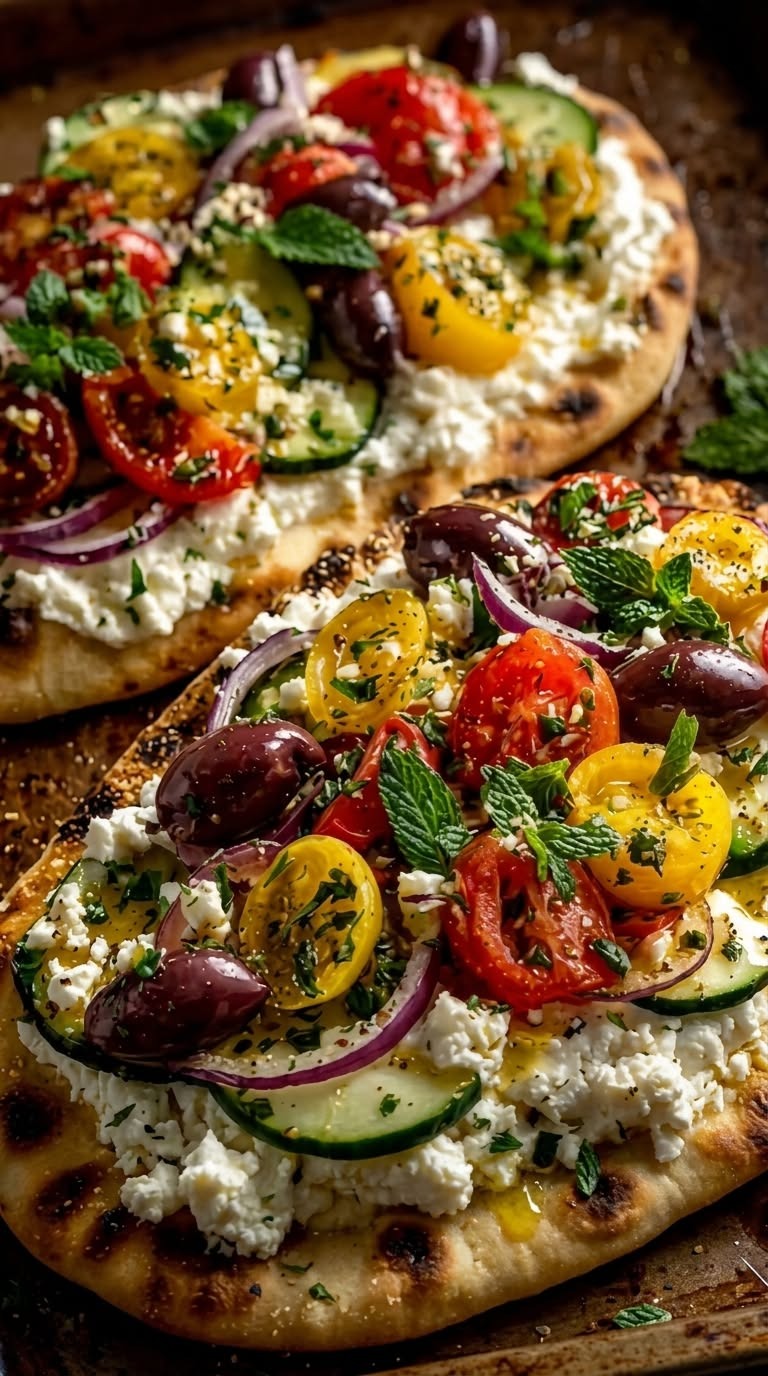
Mediterranean Whipped Feta Flatbread
Description
Mediterranean Whipped Feta Flatbread is a fresh, creamy, colourful, and incredibly satisfying meal that brings classic Mediterranean flavours together on one crisp, golden flatbread. A creamy whipped feta spread forms the base, made with tangy feta cheese, smooth Greek yoghurt, extra-virgin olive oil, and fresh garlic. It is then topped with juicy cherry tomatoes, crunchy cucumber, briny Kalamata olives, and thinly sliced red onion.
The combination of creamy, salty, fresh, crunchy, and slightly tangy ingredients makes every bite flavourful without being overly complicated. The flatbread becomes lightly crisp around the edges while the whipped feta remains creamy underneath the fresh toppings.
This recipe is perfect for a quick lunch, easy dinner, appetiser, snack, or casual gathering. It can be served whole as a personal meal or sliced into smaller pieces for sharing.
You can also customise it with fresh herbs, roasted vegetables, chickpeas, grilled chicken, or a drizzle of balsamic glaze. The basic recipe takes only a few minutes to assemble, making it ideal for busy days when you want something delicious and fresh.
Recipe Information
Prep Time: 15 minutes
Cook Time: 8–10 minutes
Total Time: About 25 minutes
Servings: 2
Course: Lunch, Dinner, Appetiser
Cuisine: Mediterranean
Difficulty: Easy
Ingredients
For the Flatbread
- 1 flatbread or naan
- 4 ounces feta cheese
- 2 tablespoons plain Greek yoghurt
- 1 tablespoon extra-virgin olive oil
- 1 small garlic clove
- 1/2 cup cherry tomatoes, halved
- 1/4 cup cucumber, diced
- 2 tablespoons Kalamata olives, sliced or halved
- 2 tablespoons red onion, thinly sliced
Optional Garnishes
- 1 tablespoon fresh parsley, chopped
- 1 tablespoon fresh dill, chopped
- 1/2 teaspoon dried oregano
- Freshly cracked black pepper
- A squeeze of fresh lemon juice
- Red pepper flakes
- Extra-virgin olive oil for drizzling
- Balsamic glaze, optional
Instructions
Step 1: Prepare the Oven
Preheat your oven to 425°F (220°C).
Place a baking sheet or pizza pan inside the oven while it preheats if you want the bottom of the flatbread to become especially crisp.
If using an air fryer, you can cook the flatbread at approximately 375–400°F depending on the size and thickness of your flatbread.
Step 2: Prepare the Whipped Feta
Add the feta cheese, Greek yoghurt, olive oil, and garlic clove to a food processor or blender.
Blend until the mixture becomes smooth, creamy, and fluffy.
Depending on the type of feta you use, the mixture may be thick. If necessary, add another small spoonful of Greek yoghurt or a tiny drizzle of olive oil to help it blend.
The finished whipped feta should be spreadable but thick enough to stay on the flatbread.
Taste and adjust if necessary. Feta is naturally salty, so additional salt usually isn’t required.
Step 3: Prepare the Vegetables
Wash the cherry tomatoes and cut them in half.
Dice the cucumber into small pieces.
Thinly slice the red onion.
Slice or halve the Kalamata olives.
Keep the vegetable pieces relatively small so that the flatbread is easy to eat and each bite contains a combination of flavours.
Set the vegetables aside.
Step 4: Prepare the Flatbread
Place the flatbread or naan on a baking sheet.
For an extra-crispy base, lightly brush the edges with a small amount of olive oil.
You can also sprinkle a little dried oregano over the surface before adding the whipped feta.
Step 5: Spread the Whipped Feta
Using the back of a spoon or a spatula, spread the whipped feta evenly over the flatbread.
Leave a small border around the edges so the toppings don’t fall off while baking.
Try to create an even layer rather than an extremely thick layer. This allows the flatbread to crisp properly while still keeping plenty of creamy feta flavour.
Step 6: Add the Tomatoes
Scatter the halved cherry tomatoes evenly over the whipped feta.
Arrange them cut-side up when possible.
The tomatoes become warm and slightly softened during baking while retaining their fresh flavour.
Step 7: Bake
Place the flatbread in the preheated oven.
Bake for approximately 8–10 minutes, or until the edges are golden and crisp and the bottom of the flatbread is heated through.
Keep an eye on it during the final few minutes because flatbreads can brown quickly.
You don’t want the cucumber, olives, and onions to become overly cooked, so the fresh toppings are best added after baking.
Step 8: Add the Fresh Toppings
Remove the flatbread from the oven.
Immediately scatter the diced cucumber, Kalamata olives, and sliced red onion over the top.
Adding these ingredients after baking keeps the cucumber crisp and the onion fresh.
Step 9: Garnish
Finish with chopped fresh parsley or dill.
Add a sprinkle of dried oregano and freshly cracked black pepper.
For extra brightness, squeeze a little fresh lemon juice over the flatbread.
A small drizzle of extra-virgin olive oil can also be added just before serving.
Step 10: Slice and Serve
Allow the flatbread to cool for 1–2 minutes.
Use a sharp knife or pizza cutter to slice it into wedges or smaller pieces.
Serve immediately while the flatbread is warm and crisp.
Notes
Use block feta when possible: Block feta often has a creamier texture and works particularly well for whipping.
Don’t add too much yoghurt: Start with the recommended amount. Adding too much can make the whipped feta too thin.
Feta is naturally salty: taste the whipped feta before adding any additional salt.
Keep cucumber fresh: Adding cucumber after baking preserves its crunch and refreshing flavour.
Watch the flatbread: Different flatbreads vary in thickness, so baking time may need to be adjusted.
Use good olive oil: extra-virgin olive oil adds noticeable flavour to the whipped feta, so choose one you enjoy.
Tips for the Best Mediterranean Flatbread
1. Bring Feta to Room Temperature
Allowing the feta to sit at room temperature for approximately 10–15 minutes can make it easier to blend into a smooth whipped mixture.
2. Blend Until Creamy
Don’t stop blending too early. The longer you blend, the smoother and fluffier the feta becomes.
Scrape down the sides of the food processor occasionally if needed.
3. Don’t Overload the Flatbread
It’s tempting to add lots of toppings, but too many can make the flatbread difficult to eat and prevent the base from becoming crisp.
A moderate layer of whipped feta and evenly distributed vegetables works best.
4. Use a Hot Oven
A properly preheated oven helps the flatbread crisp quickly without requiring a long baking time.
5. Add Fresh Toppings at the End
Cucumber, olives, and red onion taste best when they retain their fresh texture.
6. Finish with lemon.
A small squeeze of lemon juice balances the richness of the feta and olive oil and makes the entire dish taste brighter.
Serving Suggestions
Serve this flatbread as a complete light lunch with a simple green salad.
For dinner, pair it with roasted vegetables, lentil soup, or a Mediterranean bean salad.
Cut it into small squares and serve it as an appetiser at a party or gathering.
You can also serve it alongside hummus, tzatziki, or a small bowl of olives for a Mediterranean-inspired spread.
For a more substantial meal, add grilled chicken, shrimp, chickpeas, or sliced grilled vegetables.
Variations
Mediterranean Chicken Flatbread
Add sliced grilled chicken on top after baking for a higher-protein meal.
Chickpea Flatbread
Add roasted chickpeas for extra texture, plant-based protein, and fibre.
Greek-Inspired Flatbread
Add diced roasted red peppers, fresh oregano, and a small amount of crumbled feta on top.
Spicy Mediterranean Flatbread
Add red pepper flakes, sliced pepperoncini, or a drizzle of chilli oil.
Roasted Vegetable Version
Top with roasted zucchini, eggplant, bell peppers, or mushrooms.
Avocado Version
Add diced avocado after baking for extra creaminess.
Herb-Lover’s Version
Finish with fresh parsley, dill, mint, and oregano for a fresh herb-forward flavour.
Storage
This flatbread is best eaten immediately because the fresh vegetables can release moisture over time.
If you have leftovers, store them in an airtight container in the refrigerator for up to 2 days.
For best results, reheat the flatbread in an oven or air fryer rather than the microwave. This helps restore some of the crisp texture.
If you know you’ll have leftovers, consider storing the fresh cucumber and other toppings separately and adding them after reheating.
Nutritional Information
Approximate nutrition per serving, based on 2 servings and the main ingredients:
Calories: 400–450
Protein: 17–20 g
Carbohydrates: 40–45 g
Fat: 21–24 g
Fibre: 3–5 g
Sugar: 5–7 g
Sodium: 700–900 mg
Nutritional values will vary depending on the type and size of flatbread, feta cheese, yoghurt, olives, and the amount of olive oil used.
Benefits
Good Source of Protein
Feta cheese and Greek yoghurt contribute protein, which helps make this flatbread more satisfying.
Fresh Vegetables
Tomatoes, cucumbers, and red onions provide a variety of vitamins, minerals, antioxidants, and fibre.
Healthy Fats
Extra-virgin olive oil and olives provide predominantly unsaturated fats and are traditional components of Mediterranean-style eating.
Calcium
Feta and Greek yoghurt provide calcium, an important mineral for maintaining healthy bones and teeth.
Easy Way to Add Vegetables
This recipe makes it simple to incorporate several fresh vegetables into one convenient meal.
Frequently Asked Questions
Can I use regular yoghurt instead of Greek yoghurt?
Yes. Plain regular yoghurt can be used, although Greek yoghurt generally creates a thicker and creamier whipped feta spread.
If your yoghurt is very thin, you may need slightly less than the recommended amount.
Can I use crumbled feta?
Yes. Crumbled feta works perfectly well. Block feta may produce an especially smooth texture, but either option can be used.
Can I make the whipped feta ahead of time?
Yes. The whipped feta can be prepared ahead and refrigerated in an airtight container for up to approximately 3 days.
Bring it out shortly before assembling the flatbread so it is easier to spread.
Can I use pita bread instead of naan?
Absolutely. Pita, lavash, tortillas, or another sturdy flatbread can work.
Adjust the cooking time according to thickness.
Can I add meat?
Yes. Grilled chicken, turkey, shrimp, or cooked lamb can turn this into a more substantial meal.
Can I make it vegetarian?
Yes. The basic recipe is vegetarian.
How do I keep the flatbread crispy?
Don’t overload it with wet toppings, bake it in a fully preheated oven, and add the cucumber and other fresh toppings after baking.
Can I make this in an air fryer?
Yes. Use a temperature around 375–400°F and cook until the flatbread is crisp and the feta is warm. Cooking time will depend on the size and thickness of your air fryer and flatbread.
What can I use instead of Kalamata olives?
Green olives, Castelvetrano olives, or another variety you enjoy can be substituted.
Can I make the whipped feta without garlic?
Yes. Simply omit the garlic. You can replace its flavour with fresh herbs, lemon zest, or a little oregano.
Can I make the recipe gluten-free?
Yes. Use your favourite certified gluten-free flatbread or naan.
Final Thoughts
Mediterranean Whipped Feta Flatbread is an easy recipe that delivers big flavour with minimal effort. The creamy whipped feta creates a rich and tangy foundation, while juicy tomatoes, crisp cucumber, Kalamata olives, and red onion provide freshness, crunch, and classic Mediterranean character.
The key is to keep the balance of textures. Bake the flatbread with the creamy feta and tomatoes, then add the cucumber, olives, and red onion afterward. Finish with fresh herbs, lemon juice, and a drizzle of olive oil for a bright and flavourful final touch.
Whether you’re looking for a quick lunch, easy dinner, party appetiser, or simple meatless meal, this flatbread is a delicious option that can be customised in countless ways. Add chicken or chickpeas for more protein, roasted vegetables for extra flavour, or a little spice when you’re craving something bolder.