
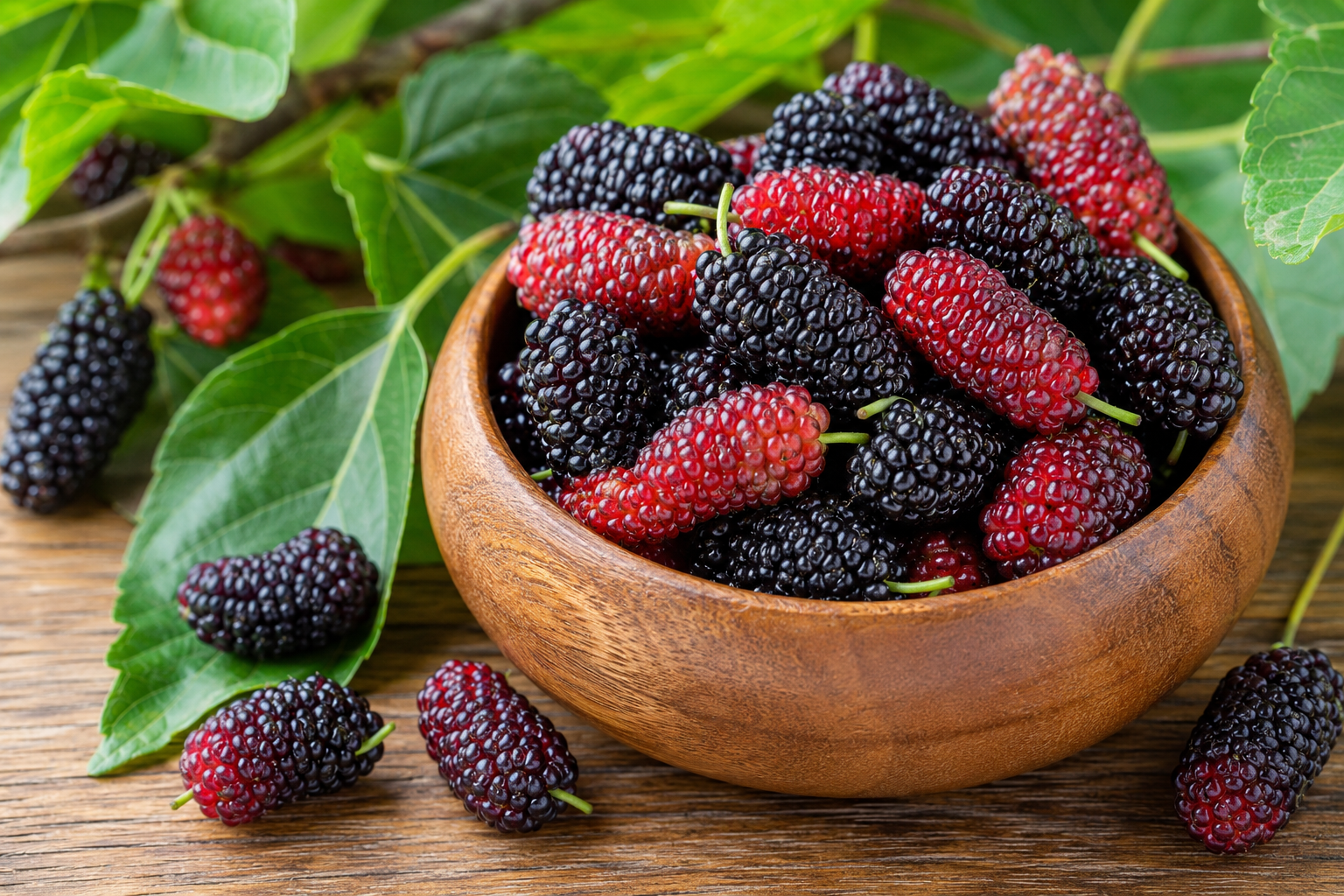
Mulberry delicious and nutrient-rich fruit: A Nutritious Fruit for Everyday Wellness
Mulberries are sweet, juicy berries that grow on trees belonging to the genus Morus. They come in several varieties, including white, red, and black mulberries. For centuries, mulberries have been enjoyed as food and used in traditional wellness practices across Asia, Europe, and the Middle East.
These berries are packed with vitamins, minerals, antioxidants, and plant compounds that can support overall health and well-being when included as part of a balanced diet.
Nutritional Highlights:
Mulberries contain:
Vitamin C
Vitamin K
Iron
Potassium
Fiber
Calcium
Antioxidants such as anthocyanins and resveratrol
Plant compounds called flavonoids
They are naturally low in calories while providing beneficial nutrients.
Potential Health Benefits:
1. Rich in Antioxidants
Mulberries contain antioxidants that help protect cells from oxidative stress caused by free radicals. This may support healthy aging and overall wellness.
2. Supports Heart Health
The fiber, potassium, and antioxidant content may help support healthy cholesterol levels and cardiovascular function as part of a healthy lifestyle.
3. May Help Blood Sugar Management
Mulberries contain compounds that may slow carbohydrate digestion and absorption. This may help support healthy blood sugar control when consumed in moderation.
4. Supports Digestive Health
The fiber in mulberries promotes regular bowel movements and supports a healthy digestive system.
5. Immune System Support
Vitamin C contributes to normal immune function and helps the body maintain healthy tissues.
6. Supports Healthy Skin
Antioxidants and vitamin C play important roles in collagen production and protecting skin from environmental stressors.
7. Provides Iron
Mulberries contain iron, which helps the body produce red blood cells and transport oxygen throughout the body.
How to Use Mulberries:
Fresh
- Eat as a snack
- Add to fruit salads
- Mix into yogurt
- Blend into smoothies
Dried
- Add to oatmeal
- Mix into trail mix
- Sprinkle over cereal
- Use in baking
Mulberry Tea
Mulberry leaves can be dried and steeped to make tea, which is traditionally consumed for wellness support.
Homemade Jam
Cook mulberries with a small amount of sugar and lemon juice to create a delicious spread.
How It Works for Well-Being;
Mulberries support wellness through several mechanisms:
- Antioxidants help protect cells from oxidative damage.
- Fiber supports digestive health and helps promote fullness.
- Vitamins and minerals contribute to normal body functions.
- Plant compounds may support healthy blood vessel and metabolic function.
While mulberries can be a healthy addition to the diet, they are not a cure or treatment for any disease.
Storage Tips:
Fresh Mulberries
- Refrigerate immediately after washing and drying.
- Store in a breathable container.
- Best consumed within 2–5 days.
Frozen Mulberries
- Spread berries on a tray and freeze individually.
- Transfer to freezer-safe bags.
- Can be stored for up to 6–12 months.
Dried Mulberries
- Keep in an airtight container.
- Store in a cool, dry place away from sunlight.
- Use within several months for best quality.
Precautions:
- Wash thoroughly before eating.
- Introduce gradually if you are not used to high-fiber foods.
- People taking medications for blood sugar control should monitor their levels, as dietary changes can affect glucose management.
- Consult a healthcare professional if you have specific medical conditions or concerns.
Final Thoughts;
Mulberries are a delicious and nutrient-rich fruit that can be enjoyed fresh, dried, or as tea. Their combination of fiber, vitamins, minerals, and antioxidants makes them a valuable addition to a healthy diet. Whether added to smoothies, oatmeal, or enjoyed straight from the tree, mulberries offer a simple and tasty way to support overall well-being.