Autism and Natural Approaches To Support Well Being
Autism, or Autism Spectrum Disorder (ASD), is a lifelong neuro-developmental condition that affects how a person communicates, interacts socially, processes sensory information, and experiences the world. Symptoms and support needs vary widely from person to person.
Can Autism Be Cured Naturally?
There is currently no scientifically proven natural cure for autism. Autism is not considered a disease that can be cured; rather, it is a different way the brain develops and functions.
Be cautious of claims that special diets, supplements, herbs, detoxes, or home remedies can “cure” autism. Many such claims lack scientific evidence and may be expensive or potentially harmful.
Natural Approaches That May Support Well-Being:
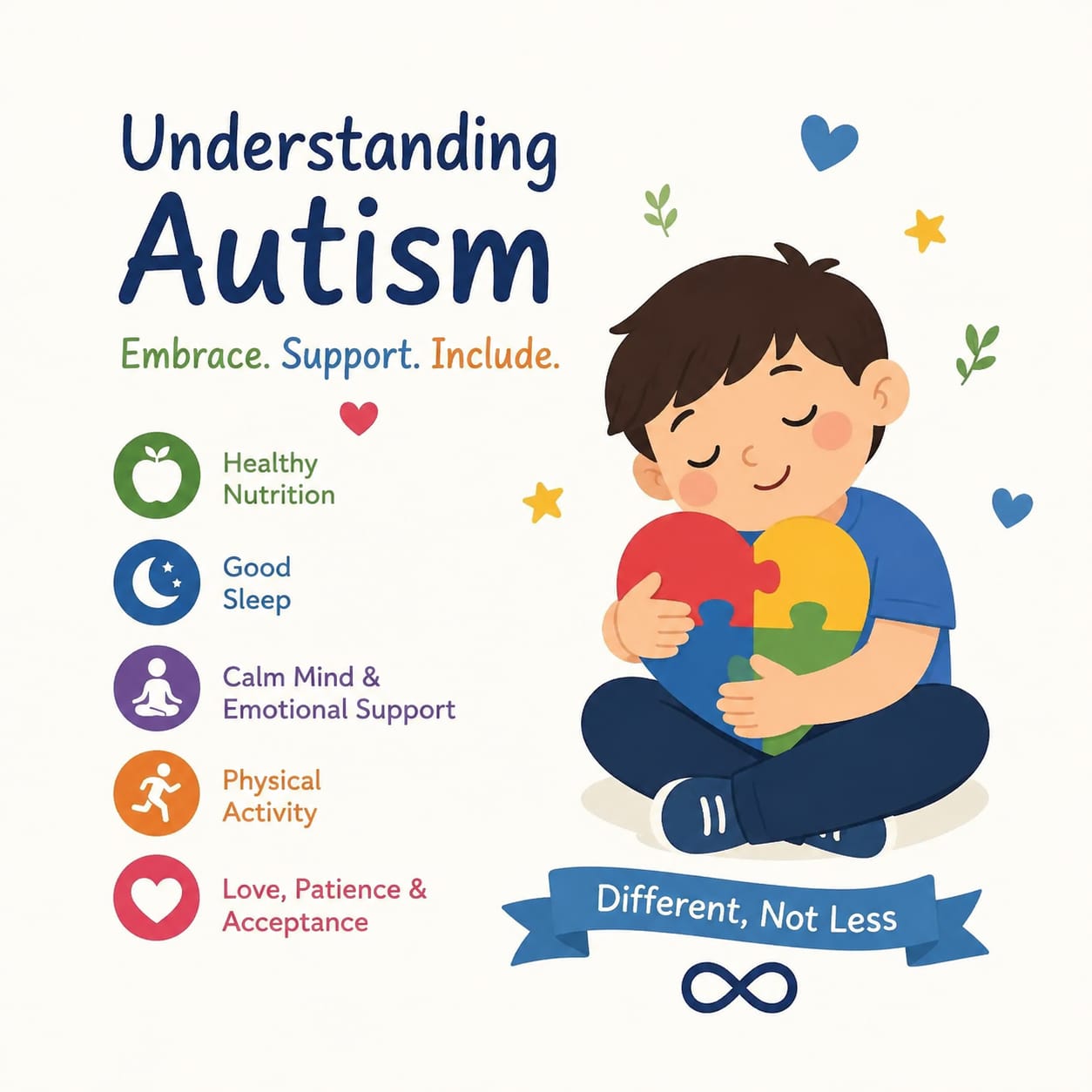
While they do not cure autism, some natural and lifestyle approaches may help improve overall health, comfort, and daily functioning:
1. Healthy, Balanced Nutrition
A nutritious diet can support general health and energy levels.
- Fruits and vegetables
- Whole grains
- Lean proteins
- Healthy fats (fish, nuts, seeds, olive oil)
- Adequate hydration
Some autistic individuals have food sensitivities or selective eating habits, so working with a healthcare professional or dietitian can be helpful.
2. Omega-3 Fatty Acids
Foods rich in omega-3s include:
- Salmon
- Sardines
- Mackerel
- Chia seeds
- Flaxseeds
- Walnuts
Research on omega-3 supplements for autism shows mixed results, but they may support overall brain and heart health.
3. Regular Physical Activity
Exercise may help with:
- Sleep quality
- Mood
- Anxiety
- Attention
- Overall health
Examples:
- Walking
- Swimming
- Cycling
- Dancing
- Playground activities for children
4. Good Sleep Habits
Many autistic individuals experience sleep difficulties.
Helpful practices include:
- Consistent bedtime routine
- Limiting screens before bed
- Quiet, comfortable sleep environment
- Regular sleep and wake times
5. Sensory Support
Some people benefit from:
- Noise-reducing headphones
- Weighted blankets (when used appropriately)
- Calm sensory spaces
- Sensory-friendly clothing
6. Stress Reduction
Activities that may help some individuals:
- Deep-pressure activities
- Gentle yoga
- Mindfulness exercises
- Music
- Art activities
Evidence-Based Supports:
The most effective supports often include:
- Speech and language therapy
- Occupational therapy
- Educational support
- Social skills training
- Behavioural interventions tailored to the individual
These approaches focus on building skills and improving quality of life rather than “curing” autism.
Remedies to Be Careful About:
There is no reliable evidence that the following cure autism:
- Detox treatments
- Bleach or chemical therapies
- High-dose vitamin regimens without medical supervision
- Miracle herbal cures
- Oxygen chamber treatments marketed as cures
Some of these can be dangerous.
Final Thoughts:
Autism is a lifelong condition, and there is currently no natural cure. However, healthy nutrition, regular exercise, good sleep, sensory support, and appropriate therapies can help autistic individuals thrive, develop skills, and improve their quality of life. If you’re asking about a child with autism, I can also provide age-specific support strategies and dietary suggestions.