
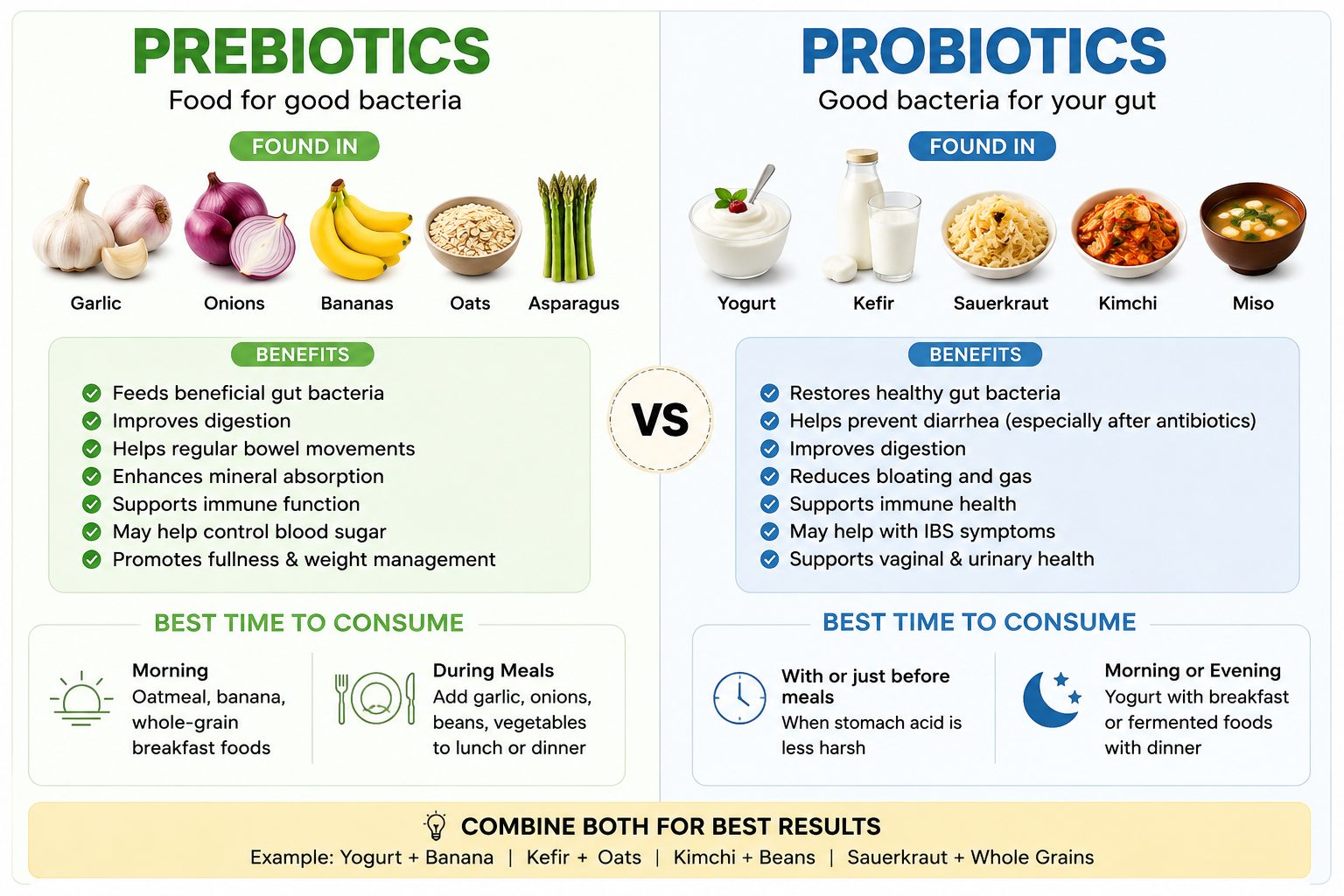
Healthy gut, healthier you! Which probiotic or prebiotic food support you
Many people confuse prebiotics and probiotics, but they work together to support a healthy digestive system.
What Are Prebiotics?
Prebiotics are types of fiber that feed the beneficial bacteria already living in your gut.
Think of prebiotics as food for good bacteria.
Foods Rich in Prebiotics:
Garlic
Onions
Leeks
Asparagus
Green bananas
Apples
Oats
Barley
Flaxseeds
Chicory root
Jerusalem artichokes
Legumes (beans, lentils, chickpeas)
Health Benefits of Prebiotics:
Feed beneficial gut bacteria
Improve digestion
Help regular bowel movements
Enhance mineral absorption (calcium and magnesium)
Support immune function
May help control blood sugar levels
Can promote feelings of fullness and support weight management
What Are Probiotics?
Probiotics are live beneficial microorganisms (good bacteria and yeasts) that help maintain a healthy gut balance.
Think of probiotics as the good bacteria themselves.
Foods Rich in Probiotics:
Yogurt with live cultures
Kefir
Sauerkraut
Kimchi
Miso
Tempeh
Kombucha
Fermented pickles (naturally fermented)
Some aged cheeses
Health Benefits of Probiotics:
Restore healthy gut bacteria
Help prevent antibiotic-associated diarrhea
Improve digestion
May reduce bloating and gas
Support immune health
May help some people with irritable bowel symptoms
Can support vaginal and urinary health in some individuals
Prebiotics vs Probiotics:
| Feature | Prebiotics | Probiotics |
|---|---|---|
| What are they? | Fiber that feeds good bacteria | Live beneficial bacteria |
| Main role | Nourish gut microbes | Add beneficial microbes |
| Found in | Fruits, vegetables, grains | Fermented foods |
| Examples | Garlic, onions, oats | Yogurt, kefir, kimchi |
| Survive digestion? | Yes | Some strains survive, some don’t |
Best Time to Consume Prebiotics:
Morning
- Oatmeal with banana
- Whole-grain breakfast foods
During Meals
- Garlic, onions, beans, and vegetables with lunch or dinner
Tips
- Increase intake gradually.
- Drink plenty of water.
- Too much too quickly can cause gas or bloating.
Best Time to Consume Probiotics:
With or Just Before Meals:
Many probiotic foods and supplements are best taken with food because stomach acid may be less harsh during meals.
Breakfast Examples:
- Yogurt with fruit
- Kefir smoothie
Evening Examples:
- Small serving of yogurt
- Fermented vegetables with dinner
Foods That Combine Well:
Pairing prebiotics and probiotics creates a synbiotic effect, helping probiotics thrive.
Examples:
Yogurt + banana
Kefir + oats
Kimchi + beans
Sauerkraut + whole grains
Yogurt + apples
Who May Benefit Most?
People taking or recovering from antibiotics
Those with occasional constipation
Individuals seeking digestive support
Older adults
People wanting to support overall gut and immune health
Precautions:
Introduce high-fiber prebiotic foods gradually.
Some people with digestive conditions may tolerate certain prebiotic foods poorly.
People with severely weakened immune systems should discuss probiotic supplements with their healthcare professional.
Fermented foods can be high in sodium, so check portions if you need to limit salt.
Final Thoughts:
Prebiotics feed beneficial bacteria, while probiotics are the beneficial bacteria themselves. For the best gut-health benefits, include both regularly in your diet. A simple combination like plain yogurt, oats, and a banana provides both probiotic and prebiotic support and can be enjoyed as a healthy breakfast or snack.