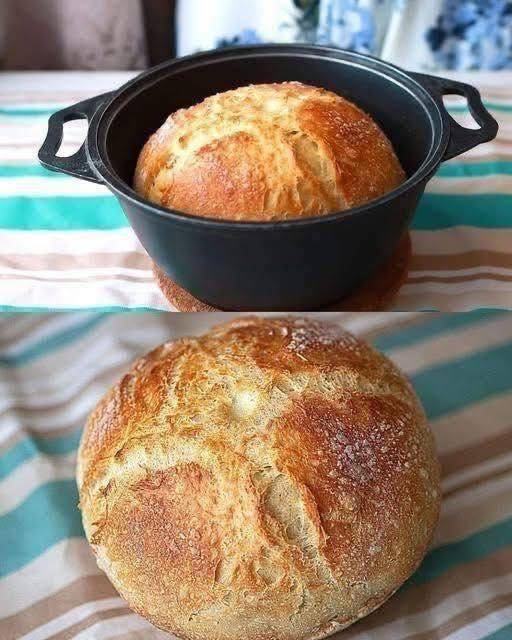
No-Knead Dutch Oven Bread
Description:
No-knead Dutch oven bread is a simple, rustic artisan-style bread that requires minimal effort yet delivers a golden, crunchy crust and a soft, airy interior. Using a Dutch oven helps trap steam, mimicking a professional bakery oven. This bread is perfect for beginners or anyone who loves homemade bread without the hassle of kneading.
Ingredients:
-
3 cups (360 g) all-purpose flour
-
1/4 tsp instant yeast
-
1 1/4 tsp salt
-
1 1/2 cups (360 ml) warm water (around 110°F / 43°C)
Optional for flavor variations:
-
1 tsp sugar or honey (for a slightly sweet crust)
-
1 tbsp olive oil (for a softer crust)
-
Herbs or seeds (rosemary, thyme, sesame seeds)
Instructions:
-
Mix the dough:
-
In a large bowl, combine flour, yeast, and salt.
-
Add warm water and stir until all ingredients are incorporated into a sticky, shaggy dough.
-
-
First rise:
-
Cover the bowl with plastic wrap or a damp towel.
-
Let it rise at room temperature for 12–18 hours until the surface is bubbly and doubled in size.
-
-
Shape the dough:
-
Lightly flour a clean surface and turn the dough out.
-
Shape it loosely into a ball. Avoid overworking the dough.
-
-
Second rise:
-
Place the dough on a piece of parchment paper and cover with a towel.
-
Let it rise for 1–2 hours, until puffy.
-
-
Preheat Dutch oven:
-
Place a Dutch oven (with lid) in your oven and preheat to 450°F (230°C) for at least 30 minutes.
-
-
Bake the bread:
-
Carefully remove the hot Dutch oven from the oven.
-
Lift the dough using the parchment paper and place it inside.
-
Cover with the lid and bake for 30 minutes.
-
Remove the lid and bake for an additional 10–15 minutes until golden brown.
-
-
Cool:
-
Transfer the bread to a wire rack and cool for at least 1 hour before slicing.
-
Tips & Notes:
-
Water temperature: Too hot kills yeast; too cold slows fermentation. Ideal: 110°F / 43°C.
-
Timing flexibility: Dough can be left longer than 18 hours for deeper flavor.
-
Crispier crust: Bake uncovered for the last 10–15 minutes.
-
Dutch oven alternatives: A heavy pot with a lid or cast iron skillet with a lid works.
-
Flour substitution: You can use bread flour for extra chewiness or mix whole wheat for more flavor.
Servings:
-
Makes 1 loaf (approx. 8–10 slices)
-
Serves 4–6 people
Approximate Nutritional Info (per slice, 1/10 loaf):
-
Calories: 180 kcal
-
Carbohydrates: 36 g
-
Protein: 5 g
-
Fat: 1 g
-
Fiber: 2 g
-
Sugar: 0.5 g
-
Sodium: 180 mg
Values may vary depending on flour type and portion size.
Benefits:
-
Homemade & preservative-free: No additives or chemicals.
-
Customizable: Add seeds, herbs, or grains for extra nutrients.
-
Cost-effective: Less expensive than store-bought artisan bread.
-
Satisfying & therapeutic: Watching dough rise and baking it fills your kitchen with comfort.
Q&A for No-Knead Dutch Oven Bread
Q1: Why no kneading?
A: The long fermentation allows gluten to develop naturally, giving the bread structure and texture without kneading.
Q2: Can I use instant yeast or active dry yeast?
A: Yes. If using active dry yeast, dissolve in water first and slightly reduce the rise time if the dough becomes very airy.
Q3: Why use a Dutch oven?
A: The lid traps steam, which is crucial for a crisp crust and soft interior, simulating a professional steam oven.
Q4: Can I freeze it?
A: Yes. Slice and freeze for up to 2 months. Reheat in the oven for 10–15 minutes to refresh the crust.
Q5: Can I make it in a regular oven without a Dutch oven?
A: Yes, but place a pan of water in the oven to create steam. Results may be slightly less crusty.