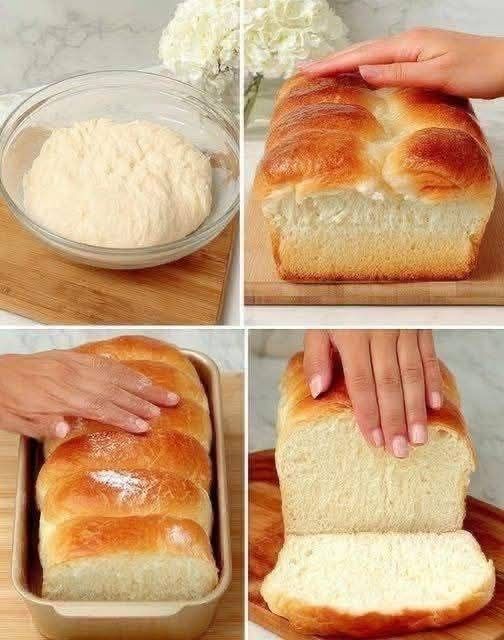
Japanese Milk Bread (Shokupan)
This image showcases the iconic Japanese Milk Bread, also known as Shokupan. It is famous for its “feathery” texture, milky sweetness, and a crumb so soft it springs back when pressed. The secret to this pillow-like consistency is the Tangzhong method—a flour-and-water (or milk) roux that pre-gelatinizes the starches, allowing the dough to hold more moisture.
Recipe Overview
-
Prep time: 30 minutes (plus 2 hours rising)
-
Cook time: 30 minutes
-
Servings: 1 loaf (approx. 10–12 slices)
Ingredients
The Tangzhong (Roux):
-
2 tbsp Bread Flour
-
6 tbsp Whole Milk
The Dough:
-
2 ½ cups Bread Flour (High protein is essential)
-
¼ cup Granulated Sugar
-
2 tsp Instant Yeast
-
½ tsp Salt
-
½ cup Warm Whole Milk
-
1 Large Egg (Room temperature)
-
4 tbsp Unsalted Butter (Softened)
Instructions
-
Make the Tangzhong: Whisk flour and milk in a small saucepan over medium-low heat. Stir constantly until it forms a thick, glue-like paste. Remove from heat and let cool.
-
Mix: In a stand mixer, combine flour, sugar, yeast, and salt. Add the warm milk, egg, and the cooled Tangzhong.
-
Knead: Knead on low until a shaggy dough forms. Add softened butter one tablespoon at a time. Increase speed to medium and knead for 10–12 minutes until the dough is smooth, elastic, and passes the “windowpane test” (you can stretch it thin without it tearing).
-
First Rise: Place in a greased bowl, cover, and let rise in a warm spot for 1 hour or until doubled in size.
-
Shape: Punch down the dough. Divide into 3 or 4 equal pieces. Roll each piece into a rectangle, fold the sides in, and roll up like a log. Place the logs side-by-side in a greased loaf pan.
-
Second Rise: Cover and let rise for 45–60 minutes until the dough reaches about 1 inch above the rim of the pan.
-
Bake: Brush the top with milk or egg wash. Bake at 175°C (350°F) for 25–30 minutes until golden brown. Internal temperature should reach 88°C (190°F).
Description & Notes
-
Texture: Unlike standard sandwich bread, this has a “shreddy” crumb that pulls apart in delicate layers.
-
Flavor: Mildly sweet and rich due to the high fat content from butter and whole milk.
-
Longevity: Thanks to the Tangzhong, this bread stays soft for 3–4 days, whereas regular homemade bread often goes stale in 24 hours.
Pro Tips
-
The Windowpane Test: Don’t stop kneading too early. If the dough tears when stretched, the gluten isn’t developed enough to trap the air bubbles needed for that lift.
-
Temperature Matters: Ensure your milk isn’t too hot (above 45°C), or you will kill the yeast.
-
Bread Flour is Non-Negotiable: All-purpose flour lacks the protein strength to support the heavy, enriched dough.
Nutritional Info (Per Slice)
-
Calories: 180 kcal
-
Carbohydrates: 28g
-
Protein: 5g
-
Fat: 6g
-
Fiber: 1g
Benefits
-
Digestibility: The long fermentation process and pre-cooked roux make the starches easier for the body to process.
-
No Preservatives: Unlike store-bought white bread, this contains zero conditioners or artificial softeners.
-
Versatility: It makes the absolute best French toast and grilled cheese sandwiches.
Q&A
Q: Can I make this by hand? A: Yes, but be prepared for a workout! The dough is quite sticky initially due to the high hydration and butter. It will take about 20 minutes of vigorous kneading.
Q: Why did my bread collapse after baking? A: This usually happens if the bread is over-proofed (let to rise too long) or if it wasn’t baked long enough to set the structure.
Q: Can I use water instead of milk? A: You can, but you will lose the signature creamy flavor and the “Milk Bread” identity. If you need it dairy-free, oat milk is a great substitute