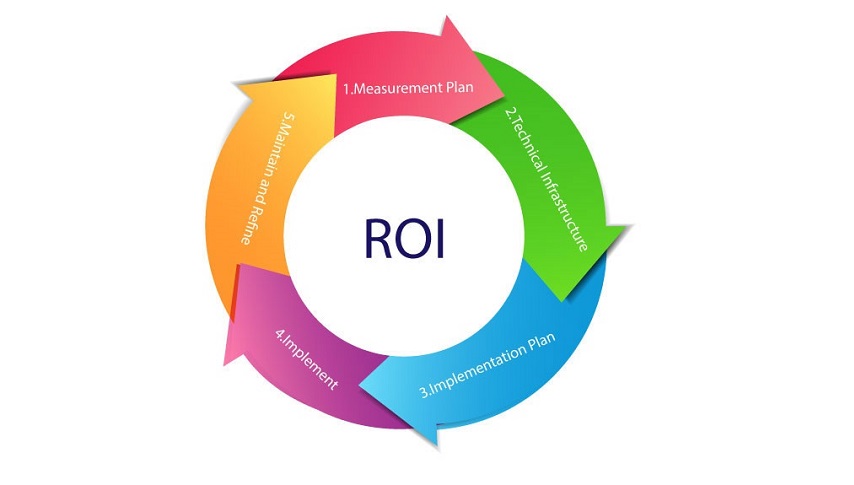
Measuring marketing ROI (Return on Investment) is one of the most critical activities for any business. Marketing efforts often require significant investment in terms of money, time, and resources. Without tracking the effectiveness of your campaigns, you cannot determine whether your marketing strategy is profitable or if adjustments are needed. ROI is a metric that helps you quantify the impact of your marketing activities, understand what works, and optimize your budget to achieve better results. Understanding how to measure marketing ROI allows businesses to make data-driven decisions, reduce wasted spend, and maximize growth.
Understanding Marketing ROI
Marketing ROI is the ratio of the revenue generated by marketing activities to the cost of those activities. Essentially, it answers the question: for every dollar spent on marketing, how much profit did the business earn? ROI provides a clear picture of campaign effectiveness and helps prioritize the most profitable marketing strategies. High ROI indicates that your marketing efforts are paying off, while low or negative ROI suggests the need for improvements. Marketing ROI can be applied to different channels, campaigns, or even individual pieces of content, providing granular insight into performance.
The Formula to Calculate Marketing ROI
The basic formula for calculating marketing ROI is straightforward:
Marketing ROI (%) = (Revenue from Marketing – Cost of Marketing) ÷ Cost of Marketing × 100
For example, if your marketing campaign cost $5,000 and generated $20,000 in revenue, your ROI would be:
($20,000 – $5,000) ÷ $5,000 × 100 = 300%
This means that for every $1 invested in marketing, your business earned $3 in revenue. While this formula is simple, accurately tracking revenue attributed to marketing can be complex, especially when multiple channels and campaigns are involved.
Tracking Marketing Costs
To measure ROI accurately, you need to track all marketing costs, including:
- Advertising spend on Google Ads, Facebook Ads, or other platforms
- Software and tools used for marketing automation, analytics, or design
- Content creation costs such as blog writing, video production, or graphic design
- Salaries or fees for marketing staff, freelancers, or agencies
- Event costs, sponsorships, or promotional activities
It’s important to include all direct and indirect costs to get a true picture of your investment. Missing even small expenses can lead to overestimating ROI.
Attributing Revenue to Marketing Efforts
The most challenging part of measuring marketing ROI is attributing revenue to the correct marketing efforts. Not all sales come directly from one campaign. Different channels often work together to drive conversions. There are several methods to attribute revenue accurately:
- First-Touch Attribution: Attributes the revenue to the first interaction the customer had with your brand. Useful for understanding which campaigns attract new leads.
- Last-Touch Attribution: Gives credit to the final interaction before the sale. Useful for measuring conversion-focused campaigns.
- Multi-Touch Attribution: Distributes revenue across all touchpoints in the customer journey, providing a more balanced view of performance.
- Time-Decay Attribution: Gives more credit to interactions closer to the time of conversion, balancing first and last touch impacts.
Choosing the right attribution model depends on your sales cycle, customer journey, and marketing strategy. Multi-touch attribution often provides the most accurate insight for complex campaigns.
Using Analytics Tools to Measure ROI
Modern businesses have access to powerful analytics tools to measure marketing ROI. Platforms like Google Analytics, HubSpot, Salesforce, and social media analytics dashboards allow you to track conversions, campaign performance, and revenue generated from each channel. Tracking metrics such as click-through rates, conversion rates, lead generation, and cost per acquisition helps you calculate ROI more accurately. Integration of CRM systems with marketing tools ensures that you can trace leads from initial engagement to final purchase. Data-driven insights make ROI calculations more precise and actionable.
Measuring ROI Across Different Marketing Channels
Marketing ROI can vary significantly across channels. For example, social media ads might generate brand awareness and engagement but have a lower direct ROI compared to email marketing campaigns, which tend to convert more effectively. Similarly, content marketing such as blog posts or SEO efforts may take time to generate revenue but produce high ROI in the long term. Evaluating ROI by channel helps businesses allocate budget efficiently and invest in strategies that provide the highest return.
Key Metrics to Monitor
Several key metrics help in measuring marketing ROI effectively:
- Customer Acquisition Cost (CAC): The total cost to acquire a new customer. Lowering CAC increases ROI.
- Lifetime Value (LTV): Total revenue expected from a customer over their relationship with your business. Higher LTV improves ROI.
- Conversion Rate: Percentage of users who take the desired action, such as making a purchase or signing up. Higher conversion rates increase revenue per marketing dollar.
- Click-Through Rate (CTR): Measures engagement with online ads or emails. Higher CTR often leads to better ROI.
- Cost Per Lead (CPL): Expense incurred to generate a lead. Reducing CPL improves ROI.
Monitoring these metrics allows businesses to identify bottlenecks, optimize campaigns, and focus on strategies that generate measurable results.
Challenges in Measuring Marketing ROI
While ROI is a valuable metric, there are challenges in accurately measuring it. Some campaigns aim to build brand awareness rather than generate immediate sales, making direct revenue attribution difficult. Long sales cycles or repeat purchase patterns complicate ROI calculations. Additionally, offline marketing activities like events, print ads, or sponsorships may not be easily tracked online. Businesses need to combine quantitative data with qualitative insights and consider both short-term and long-term impacts of marketing efforts.
Strategies to Improve Marketing ROI
Once you measure ROI, the next step is optimization. To improve marketing ROI, consider the following strategies:
- Focus on high-performing channels and reduce spending on low-performing ones
- Optimize ad targeting to reach the most relevant audience
- Test multiple campaigns with A/B testing to improve conversion rates
- Create high-quality, relevant content that attracts and converts users
- Automate marketing processes to reduce operational costs
- Retarget existing leads and customers for higher conversion rates
- Monitor and analyze ROI continuously for data-driven decisions
Consistently measuring and optimizing ROI ensures that marketing budgets are spent efficiently and contribute to sustainable growth.
Final Thoughts
Measuring marketing ROI is crucial for businesses to understand the effectiveness of their marketing efforts and make informed decisions. It provides insight into which campaigns, channels, and strategies generate the most revenue relative to cost. By tracking marketing expenses, attributing revenue accurately, leveraging analytics tools, and monitoring key metrics, businesses can optimize their marketing strategies, reduce wasteful spending, and maximize profitability. Marketing ROI is not just a number; it’s a guide to smarter investments, higher efficiency, and long-term business success.