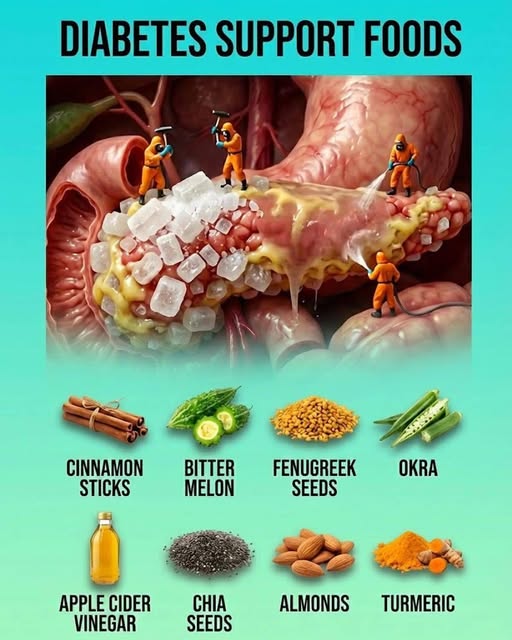
Foods Shown & Their Evidence-Based Roles
Cinnamon
How it may help
-
May improve insulin sensitivity
-
Can slightly reduce fasting blood glucose in some people
How to use
-
¼–½ tsp per day (powder or stick tea)
Caution
-
Use Ceylon cinnamon if possible (safer for liver)
-
Not a substitute for medication
Bitter Melon
How it may help
-
Contains compounds that act similar to insulin
-
May help reduce post-meal glucose spikes
How to use
-
Cooked vegetable, juice (small amounts), or capsules
Caution
-
Very strong effect for some people
-
Can cause low blood sugar if combined with meds
Fenugreek Seeds
How it may help
-
High soluble fiber → slows carbohydrate absorption
-
May reduce fasting and post-meal glucose
How to use
-
Soak 1 tbsp overnight, consume seeds or water
Caution
-
Can cause bloating
-
May lower blood sugar significantly
Okra
How it may help
-
Rich in mucilage (gel-like fiber)
-
Slows sugar absorption in the gut
How to use
-
Lightly cooked, stir-fried, or soaked water
Very safe, food-based support
Apple Cider Vinegar
How it may help
-
Can reduce post-meal glucose rise
-
Improves insulin response slightly
How to use
-
1 tsp–1 tbsp diluted in water before meals
Caution
-
Never drink undiluted
-
Avoid if you have stomach ulcers or reflux
Chia Seeds
How it may help
-
High fiber → stabilizes blood sugar
-
Improves satiety and gut health
How to use
-
1 tbsp soaked in water, yogurt, or food
Very safe, excellent daily option
Almonds
How they help
-
Healthy fats + protein
-
Reduce glycemic impact of meals
How to use
-
10–15 almonds per serving
Avoid
-
Sugar-coated or salted versions
Turmeric
How it may help
-
Anti-inflammatory
-
May support insulin signaling
How to use
-
½ tsp with black pepper and fat
Caution
-
Not suitable in large doses if gallbladder issues exist
What These Foods CAN Do
✔ Support insulin sensitivity
✔ Reduce glucose spikes after meals
✔ Improve gut health
✔ Support overall metabolic health
What These Foods CANNOT Do
✖ Cure diabetes
✖ Replace insulin or medication
✖ Instantly “remove sugar” from blood
✖ Reverse diabetes alone
Who Benefits Most
-
Prediabetes
-
Type 2 diabetes (with medical care)
-
Insulin resistance
-
Metabolic syndrome
People with Type 1 diabetes must be especially cautious and consult their doctor.
Best Way to Use These Foods
-
Combine them with:
-
Regular movement
-
Balanced meals (protein + fiber)
-
Adequate sleep
-
Stress control
-
-
Consistency > quantity
Bottom Line
This image promotes dietary support, not a medical solution. When used wisely, these foods can help stabilize blood sugar, but they work best as part of a long-term lifestyle approach under medical guidanc