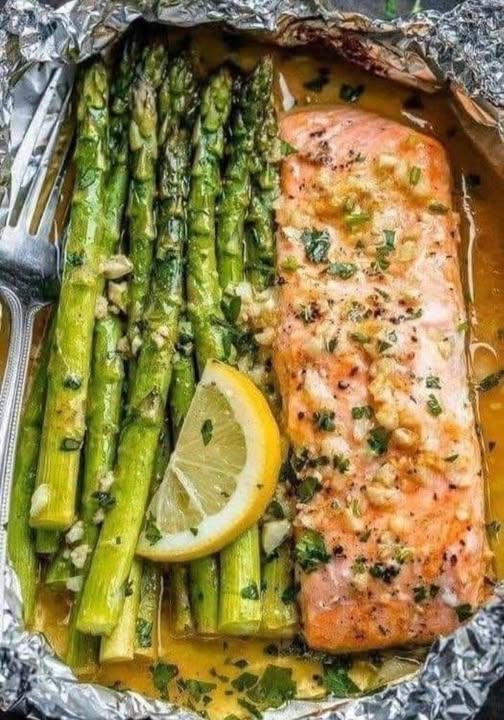
Baked Salmon in Foil with Asparagus
This recipe features flaky, succulent salmon fillets nestled alongside crisp-tender asparagus, finished with a luscious lemon-garlic butter sauce. It’s a low-carb, high-protein meal that requires minimal cleanup.
-
Prep time: 10 minutes
-
Cook time: 15–20 minutes
-
Servings: 2 people
Ingredients
-
Salmon: 2 (6 oz) skin-on or skinless fillets
-
Asparagus: 1 medium bunch (woody ends trimmed)
-
Butter: 3 tbsp, melted (or olive oil for a dairy-free version)
-
Garlic: 3 cloves, minced
-
Lemon: 1 fresh lemon (half juiced, half sliced into rounds)
-
Seasoning: 1 tsp dried oregano (or thyme), salt, and black pepper to taste
-
Garnish: Fresh parsley, chopped
Instructions
-
Preheat & Prep: Heat your oven to 400°F (200°C). Cut two large squares of heavy-duty aluminum foil.
-
Arrange: Place half of the asparagus in the center of each foil sheet. Season with salt and pepper. Place a salmon fillet on top of the asparagus.
-
Make the Sauce: In a small bowl, whisk together the melted butter, minced garlic, lemon juice, and oregano.
-
Season: Drizzle the garlic butter sauce generously over the salmon and asparagus. Top the salmon with 1–2 lemon slices.
-
Seal: Fold the sides of the foil over the salmon and asparagus, crimping the edges tightly to create a sealed packet.
-
Bake: Place the packets on a baking sheet. Bake for 15–20 minutes, depending on the thickness of your salmon.
-
Optional Broil: Carefully open the packets (watch out for steam!) and broil for 2–3 minutes if you prefer a slightly golden top.
-
Serve: Garnish with fresh parsley and serve immediately.
Nutritional Info (Per Serving)
-
Calories: 420 kcal
-
Protein: 36g
-
Fat: 28g
-
Net Carbs: 5g
-
Fiber: 3g
Health Benefits
-
Omega-3 Fatty Acids: Salmon is a powerhouse for heart health and brain function.
-
High Protein: Keeps you satiated and supports muscle repair.
-
Asparagus: A great source of fiber, folate, and vitamins A, C, and K.
-
Low Glycemic: Excellent for blood sugar management and keto-friendly lifestyles.
Chef’s Tips & Notes
-
Trim the Asparagus: Don’t just cut the ends; snap one manually. It will naturally break where the woody part ends and the tender part begins. Use that as a guide for the rest of the bunch.
-
Don’t Overcook: Salmon is done when it reaches an internal temperature of 145°F ($63^\circ\text{C}$) and flakes easily with a fork.
-
Room Temp: Let the salmon sit out for 10 minutes before cooking to ensure it cooks evenly.
Q&A
Q: Can I use frozen salmon?
A: Yes, but ensure it is completely thawed and patted dry with paper towels first. Excess moisture from frozen fish can make the sauce watery.
Q: Can I swap the asparagus for another vegetable?
A: Absolutely. Thinly sliced zucchini, green beans, or snap peas work beautifully. Just ensure they are vegetables that cook at a similar rate to the salmon.
Q: Is there a way to make this without foil?
A: You can use parchment paper (en papillote) for a similar effect, or simply bake everything on a sheet pan, though you may lose some of that concentrated “steamed” moisture.