
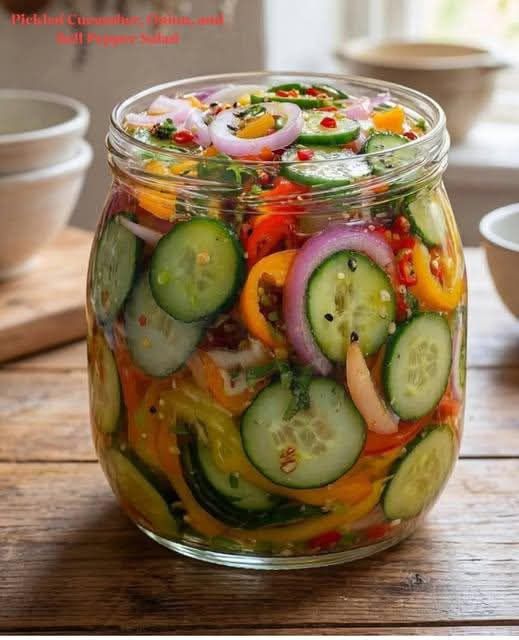
Anti-Inflammatory Pickled Salad
This recipe focuses on whole-food ingredients known to combat oxidative stress. By using apple cider vinegar (with “the mother”) and fresh turmeric, we turn a simple side dish into a functional gut-health powerhouse.
-
Prep time: 15 minutes
-
Marinating time: 1 hour (minimum)
-
Servings: 6 side-dish servings
Ingredients
| Category | Ingredient | Quantity |
| Vegetables | English Cucumber (thinly sliced) | 2 large |
| Red Onion (thinly sliced) | 1 medium | |
| Red & Yellow Bell Peppers (julienned) | 2 total | |
| The Brine | Apple Cider Vinegar (raw/unfiltered) | 1/2 cup |
| Extra Virgin Olive Oil | 1/4 cup | |
| Maple Syrup or Honey | 1-2 tbsp | |
| Fresh Ginger (grated) | 1 tsp | |
| Fresh Turmeric (grated) or powder | 1/2 tsp | |
| Seasoning | Sea Salt & Black Pepper | to taste |
| Red Pepper Flakes (optional) | pinch | |
| Fresh Dill or Parsley | 1/4 cup |
Instructions
-
Prep the Veggies: Slice the cucumbers into thin rounds. Slice the onions and bell peppers into thin strips. Place them all in a large glass bowl or a half-gallon mason jar.
-
Whisk the Dressing: In a small bowl, whisk together the apple cider vinegar, olive oil, sweetener, ginger, turmeric, salt, and pepper.
Pro Tip: Adding a crack of black pepper is essential here; it contains piperine, which increases the absorption of the curcumin in turmeric by up to 2,000%.
-
Toss and Coat: Pour the dressing over the vegetables. Toss thoroughly to ensure every slice is coated.
-
Marinate: Cover and refrigerate for at least one hour. This allows the vinegar to “pickle” the onions, removing their sharp bite and softening the peppers.
-
Garnish: Just before serving, toss in your fresh herbs.
Nutrition Information (Per Serving)
-
Calories: 95 kcal
-
Total Fat: 9g
-
Carbohydrates: 8g
-
Fiber: 2g
-
Protein: 1g
Key Health Benefits
-
Curcumin (Turmeric): A potent bioactive compound that fights inflammation at the molecular level.
-
Quercetin (Red Onion): A flavonoid that helps stabilize cells that release histamine in the body, providing an anti-inflammatory effect.
-
Vitamin C (Bell Peppers): Crucial for collagen synthesis and immune function.
-
Acetic Acid (ACV): May help improve insulin sensitivity and support a healthy gut microbiome.
Chef’s Notes & Tips
-
The Cucumber Choice: I recommend English or Persian cucumbers. They have thinner skins and smaller seeds, meaning they won’t get “mushy” as quickly as standard slicing cucumbers.
-
Zero-Waste Tip: Don’t toss the leftover liquid! Once the veggies are gone, use the remaining brine as a base for a vinaigrette or to quick-pickle some shredded cabbage.
-
Storage: This lasts in an airtight glass container for up to 5 days. Avoid plastic, as the vinegar can react with it over time.
Common Questions (Q&A)
Q: Can I make this without sugar?
A: Absolutely. You can omit the sweetener entirely or use a few drops of liquid stevia. The maple syrup is mainly there to balance the acidity of the vinegar.
Q: Is it okay to use white vinegar instead?
A: You can, but you’ll lose the probiotic benefits and the mellow flavor profile of apple cider vinegar. If you must switch, try Rice Vinegar for a softer taste.
Q: Does this count as a probiotic food?
A: If you use “raw/unfiltered” apple cider vinegar and don’t heat it, you are getting some beneficial enzymes, though it isn’t as potent as fully fermented pickles (which are brined in salt, not vinegar).