
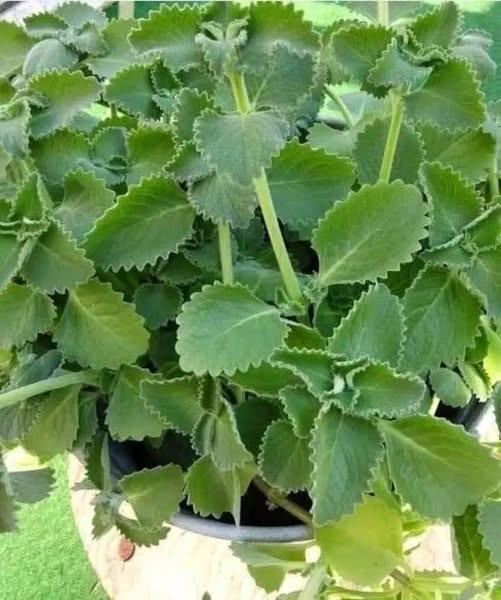
Plectranthus amboinicus Herbal Tea
Plant Identification
-
Scientific name: Plectranthus amboinicus
-
Common names: Cuban oregano, Indian borage, Mexican mint, Thick-leaf thyme
-
Plant type: Perennial aromatic herb
-
Part used: Fresh leaves
Description
Plectranthus amboinicus is a thick-leafed aromatic herb widely used in traditional medicine across Asia, Africa, and the Caribbean. It is valued for its anti-inflammatory, antimicrobial, and soothing properties, especially for respiratory and digestive wellness.
⚠️ Despite online claims, it does NOT cure cataracts, restore eyesight, or replace glasses. Any claim suggesting so is misinformation.
Full Recipe
Ingredients
-
2–3 fresh Plectranthus amboinicus leaves
-
1 cup (250 ml) hot water
-
Optional: honey or lemon (for taste)
Instructions
-
Wash the leaves thoroughly.
-
Tear or crush them lightly to release oils.
-
Add to a cup of hot (not boiling) water.
-
Cover and steep for 5–10 minutes.
-
Strain and drink warm.
Notes & Tips
-
Best consumed once daily
-
Use fresh leaves for maximum aroma
-
Avoid excessive intake (strong taste = strong oils)
-
Pregnant or breastfeeding individuals should consult a healthcare provider
-
Never apply leaf juice directly into the eyes
Servings
-
1 serving per recipe
-
Safe use: 1 cup per day
Nutritional Info (Approximate)
-
Calories: Very low
-
Rich in:
-
Essential oils (thymol, carvacrol)
-
Antioxidants
-
Trace minerals
-
-
No fats, no cholesterol
Traditional Benefits (Evidence-Aware)
✔️ Supports respiratory comfort (cough, congestion)
✔️ Aids digestion and reduces bloating
✔️ Mild anti-inflammatory support
✔️ Antimicrobial properties
✔️ General wellness support
❌ Does NOT:
-
Cure cataracts
-
Restore lost vision
-
Replace medical eye treatment
Q & A
Q: Can this plant cure cataracts?
A: No. Cataracts cannot be cured naturally. Surgery is the only proven treatment.
Q: Why do people say it improves eyesight?
A: Because antioxidants may support overall eye health, but this does not reverse eye diseases.
Q: Can I use it as eye drops?
A: Absolutely not. This is unsafe and can cause infection or injury.
Q: Is it safe to drink daily?
A: Yes, in moderate amounts as tea.
Q: Who should avoid it?
A: Pregnant women, infants, and people on strong medications should consult a doctor first.