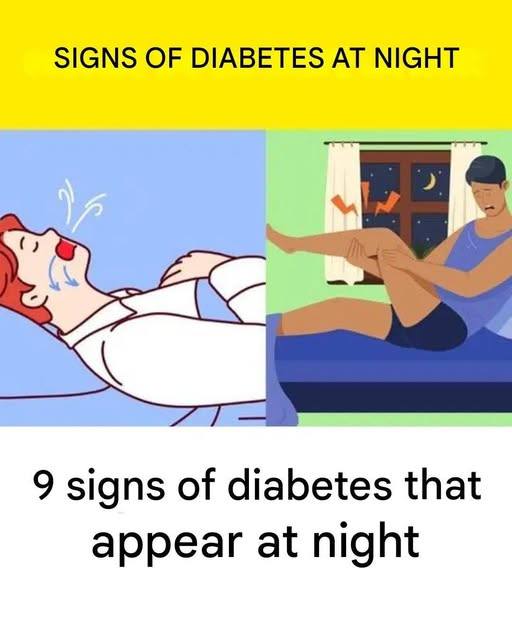
9 Signs of Diabetes That May Appear at Night
Description
Some early signs of diabetes can become more noticeable at night due to changes in hormones, hydration, and blood sugar levels during sleep. These signs do not confirm diabetes, but they can be clues that blood sugar regulation isn’t working as well as it should. A healthcare professional is the only one who can diagnose diabetes.
9 Common Nighttime Signs
-
Frequent urination at night (nocturia)
High blood sugar causes the kidneys to work harder, leading to nighttime bathroom trips. -
Excessive thirst before or during the night
Fluid loss from urination can trigger strong thirst. -
Night sweats
Can happen when blood sugar drops too low during sleep. -
Restless sleep or insomnia
Blood sugar fluctuations may interfere with deep sleep. -
Leg cramps or tingling
Nerve irritation or circulation issues can worsen at night. -
Dry mouth or throat
Often linked to dehydration from high blood sugar. -
Headaches upon waking
May be related to overnight blood sugar changes. -
Nighttime hunger
Low blood sugar can trigger hunger during sleep. -
Unusual fatigue even after sleeping
Poor glucose use can prevent restorative sleep.
Important Notes
-
These signs can have many causes, not just diabetes.
-
Experiencing one sign occasionally is common.
-
Repeated or worsening symptoms should be discussed with a parent/guardian and a doctor.
-
Never self-diagnose.
Tips for Nighttime Health
-
Maintain a consistent sleep schedule
-
Avoid heavy sugary snacks before bed
-
Stay hydrated during the day
-
Get regular physical activity
-
If symptoms persist, talk to a healthcare professional
Servings
❌ Not applicable (this is health information, not food)
Nutritional Info
❌ Not applicable
Benefits of Knowing These Signs
-
Encourages early awareness
-
Helps people seek help sooner
-
Supports better sleep and overall health
-
Promotes informed conversations with doctors
Q & A
Q: Do these signs mean I have diabetes?
A: No. Only medical testing can determine that.
Q: Can teens experience these signs?
A: Yes, but many non-diabetes conditions can cause them too.
Q: Should I be worried if I notice one sign?
A: Not necessarily. Track patterns and talk to a trusted adult.
Q: What should I do if several signs happen often?
A: Tell a parent or guardian and see a healthcare provider.